Every business looking to grow online eventually faces the same question: should you invest in SEO or pay-per-click advertising? Both drive traffic, both can generate leads, and both compete for the same budget. But they work in fundamentally different ways, and the right answer depends on your goals, your timeline, and how your customers actually search. This guide breaks down the real differences so you can make a decision based on what your business actually needs, not what sounds better in a pitch deck.
If you are early in your research and want broader context first, our piece on why your business needs an SEO agency in 2026 covers the strategic case for organic search investment in more depth.
What Is SEO and How Does It Drive ROI?
Search engine optimization is the process of improving your website so it ranks higher in organic search results. When someone searches for a product, service, or answer and clicks a non-paid result, that is organic traffic driven by SEO. The investment is mostly time, strategy, and execution. The payoff compounds over time.
SEO covers several interconnected disciplines which SEO Team Toronto excels at. Technical SEO ensures search engines can crawl and index your site efficiently. On-page SEO aligns your content and page structure with what searchers are actually looking for. Off-page SEO builds your site's authority through links and digital PR. And content marketing creates the pages, articles, and resources that attract and convert qualified visitors.
The ROI from SEO is not immediate, but it is durable. According to BrightEdge research, organic search drives more than 50% of all website traffic across industries, more than any other single channel. Once your pages earn strong rankings, that traffic does not stop when you pause spending. That is the core ROI argument for SEO.
What Is PPC and How Does It Drive ROI?
Pay-per-click advertising, most commonly through Google Ads, places your business at the top of search results immediately. You bid on keywords, set a budget, and pay each time someone clicks your ad. Traffic starts the day your campaign launches and stops the day your budget runs out.
PPC offers precise control. You can target specific keywords, locations, devices, times of day, and audiences. You can test ad copy, landing pages, and offers quickly. And you get detailed conversion data almost instantly. For businesses that need leads now or are testing a new market, PPC management gives you speed and measurability that SEO simply cannot match in the short term.
The trade-off is ongoing cost. Unlike SEO, where ranking pages continue delivering traffic without additional spend, every PPC click costs money. As competition for keywords increases, so do click costs. WordStream data shows average cost-per-click across industries ranges from a few dollars to well over $50 for competitive B2B categories. Over time, this cost-to-traffic ratio rarely improves on its own.
SEO vs PPC: A Direct Comparison
Time to Results
PPC is instant. SEO typically takes 3 to 6 months to show meaningful organic movement, and sometimes longer in competitive industries. If you are launching a new product or business and need traffic immediately, PPC is the practical starting point. If you are building for the long term, SEO is the better investment.
Our SEO strategy guide for Canadian businesses outlines realistic timelines and what to prioritize in your first 90 days if you are starting an organic program from scratch.
Cost Structure
SEO has upfront costs, whether that is agency fees, content production, or technical work, but those costs build an asset. A well-optimized page can generate traffic for years with minimal ongoing investment. PPC costs are variable and recurring. There is no equity being built; you are renting visibility, not owning it.
For most businesses, the cost-per-acquisition from SEO drops significantly over 12 to 24 months as rankings stabilize and content compounds. PPC cost-per-acquisition tends to hold flat or increase as competitors bid up keyword prices.
Click-Through Rates and Trust
Organic results consistently earn higher click-through rates than paid ads for most informational and consideration-stage queries. Moz research on organic CTR and more recent studies show users often skip ads for queries where they want trusted information rather than a sales pitch. For transactional searches like product purchases or service bookings, ads perform more competitively.
Targeting Precision
PPC wins here. You can target by keyword intent, geography, device, time of day, audience segment, and remarketing lists. SEO targets broadly through content relevance and keyword optimization, but you cannot control exactly who sees your pages or when with the same granularity.
Scalability
SEO scales without proportional cost increases. A piece of content that ranks well does not cost more to maintain as traffic grows. PPC scales in direct proportion to spend. Doubling your traffic through paid search typically means doubling your budget.
For businesses with large, complex sites, this scalability question becomes especially important. Our enterprise SEO services are built specifically for organizations that need organic growth to scale without requiring proportional increases in paid spend.
When SEO Is the Better Investment
SEO tends to deliver stronger long-term ROI when your business has time to invest in building authority, when your audience is actively searching for information during a research or comparison phase, or when you are in an industry where organic trust drives conversion more than ad copy does.
SEO is particularly strong for businesses that produce content regularly, have clear topical expertise, and are willing to invest in both technical health and content quality. Industries like professional services, B2B, healthcare, and e-commerce all see compounding returns from well-executed SEO programs.
It is also worth noting that as AI Overviews and generative search continue to reshape the results page, the way SEO delivers value is evolving. Our overview of SEO for AI Overviews and generative search explains how to structure content for these new environments, and why organic presence in AI-generated answers is becoming as important as traditional blue-link rankings.
When PPC Is the Better Investment
PPC makes the most sense when you need traffic immediately, when you are promoting a time-limited offer, when you are testing a new market or product before committing to full-scale SEO, or when the keywords you want to rank for are extremely competitive and your domain authority is not yet strong enough to compete organically.
PPC is also valuable for high-intent, transactional queries where users are ready to buy. If someone is searching for a specific product with a purchase intent signal, showing up first with a compelling ad can convert at very high rates, even if the click costs more than an organic equivalent.
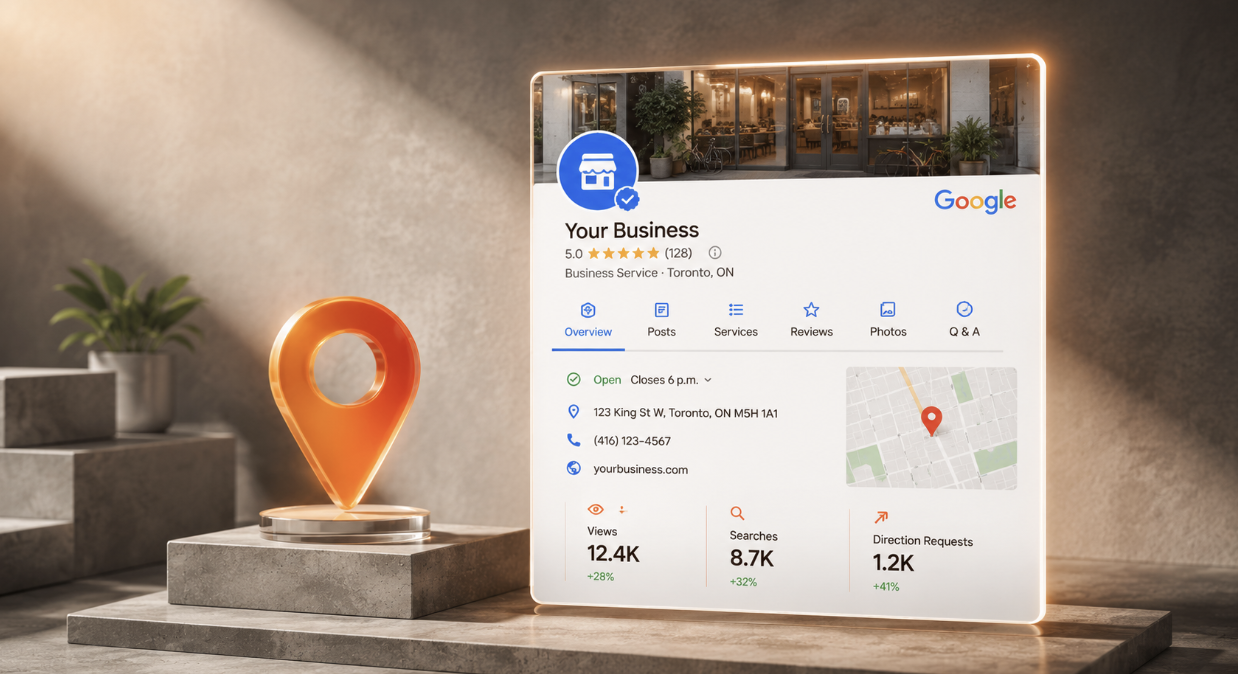
For local businesses, combining local SEO with targeted paid campaigns can be particularly effective during the time it takes for organic rankings to build, keeping you visible in the map pack and the ads section simultaneously.
The Case for Running Both Together
The SEO vs PPC debate often creates a false choice. For many businesses, the smartest strategy is not to pick one but to understand how each channel supports the other at different stages.
PPC data tells you which keywords convert before you spend months trying to rank for them organically. Organic rankings reduce your reliance on paid spend for terms you already dominate. Remarketing through paid channels re-engages visitors who found you through organic search. And brand awareness built through SEO content often improves ad quality scores and click-through rates.
The key is having a clear plan for how each channel is being measured and what role it plays at each stage of the funnel. Without that clarity, you end up with two channels competing for credit rather than working together.
If you want to understand what a structured SEO program looks like before layering in paid spend, our breakdown of what is included in SEO packages from an agency covers the deliverables and scope you should expect from a well-run organic program.
How to Think About ROI Across Both Channels
Return on investment from either channel depends heavily on how you measure it. PPC makes attribution straightforward because every click is tracked and every conversion tied back to ad spend. SEO attribution is more complex because organic traffic touches multiple touchpoints before converting.
The right comparison is not cost-per-click but cost-per-acquisition over time. In the first three to six months, PPC will almost always show a lower cost-per-acquisition because SEO has not yet built momentum. But by month 12 to 24, well-executed SEO programs typically achieve a lower cost-per-acquisition than paid search, and that gap widens as organic authority compounds.
According to Search Engine Land, businesses that invest in both channels and coordinate their measurement frameworks consistently outperform those running each channel in isolation. The channels inform each other in ways that improve total marketing efficiency.
Choosing the Right Path for Your Business
There is no universal answer to the SEO vs PPC question. The right choice depends on your timeline, your budget structure, your competitive landscape, and your tolerance for delayed returns versus ongoing spend.
If you are building for sustainable growth and have at least 6 to 12 months to invest, SEO will almost always deliver better ROI over time. If you need traffic and leads in the next 30 to 90 days, PPC gives you speed that SEO cannot match. And if your budget allows, running both in a coordinated strategy typically outperforms either channel alone.
At SEO Team Toronto, we help businesses understand exactly where they are on that spectrum and build programs that match their goals. Whether that means starting with a focused SEO audit to uncover quick wins, developing a content strategy that builds topical authority, or mapping out how paid and organic can work together, the starting point is always clarity on what you actually need to achieve.
If you are ready to get that clarity, you can request a free SEO proposal or speak with an SEO specialist to walk through your specific situation.
Frequently Asked Questions: SEO vs PPC
Is SEO or PPC better for small businesses?
For most small businesses, SEO provides better long-term value because it builds an asset that compounds over time without requiring ongoing spend per click. PPC can be useful for specific promotions or when speed is essential, but the recurring cost structure is harder to sustain at smaller budgets.
How long does SEO take to outperform PPC on ROI?
Most businesses see SEO begin to outperform PPC on cost-per-acquisition somewhere between 12 and 24 months. The timeline depends on how competitive your industry is, how well your site is currently optimized, and how consistently you publish high-quality content.
Can SEO and PPC be run at the same time?
Yes, and in many cases this is the recommended approach. Running both channels allows you to use PPC data to inform which keywords are worth targeting organically, reduce paid spend over time as SEO rankings build, and maintain visibility across both organic and paid placements simultaneously.
What types of businesses benefit most from SEO?
Businesses with a longer sales cycle, strong content opportunities, and audiences that research before buying tend to see the strongest SEO returns. This includes B2B services, professional services, healthcare, legal, and e-commerce. Businesses in highly competitive industries or with very new websites may need to combine SEO with paid search while organic authority builds.
Does PPC help SEO rankings?
Paid search does not directly influence organic rankings. Google's algorithm does not reward pages because they run Google Ads. However, PPC and SEO can support each other indirectly: PPC data informs keyword strategy, and increased brand awareness from ads can lead to more branded searches and direct traffic, which can positively influence overall site engagement signals.