








The Problem
Pages often miss search intent. Titles and headings don’t match queries, content is thin or duplicated, and internal links point the wrong way. Meta descriptions underperform, FAQs are absent, and page templates bury key info. The result is a page that looks fine to humans but signals weak relevance to search engines.
The Impact
Rankings stall on page two, click-through drops, and the wrong keywords start ranking. Time on page is shallow, conversions lag, and featured snippets or rich results go to competitors. For local searches in Toronto, weak location cues keep you out of high-intent traffic.
The Solutions
We align each page to a single intent and rebuild the structure: clear titles, focused H1-H6s, stronger paragraphs, and concise FAQs. We consolidate duplicates, add page-level schema where it helps, and create internal links that guide users and crawlers to money pages. This on-page optimization lifts relevance, improves CTR, and turns more visits into leads.

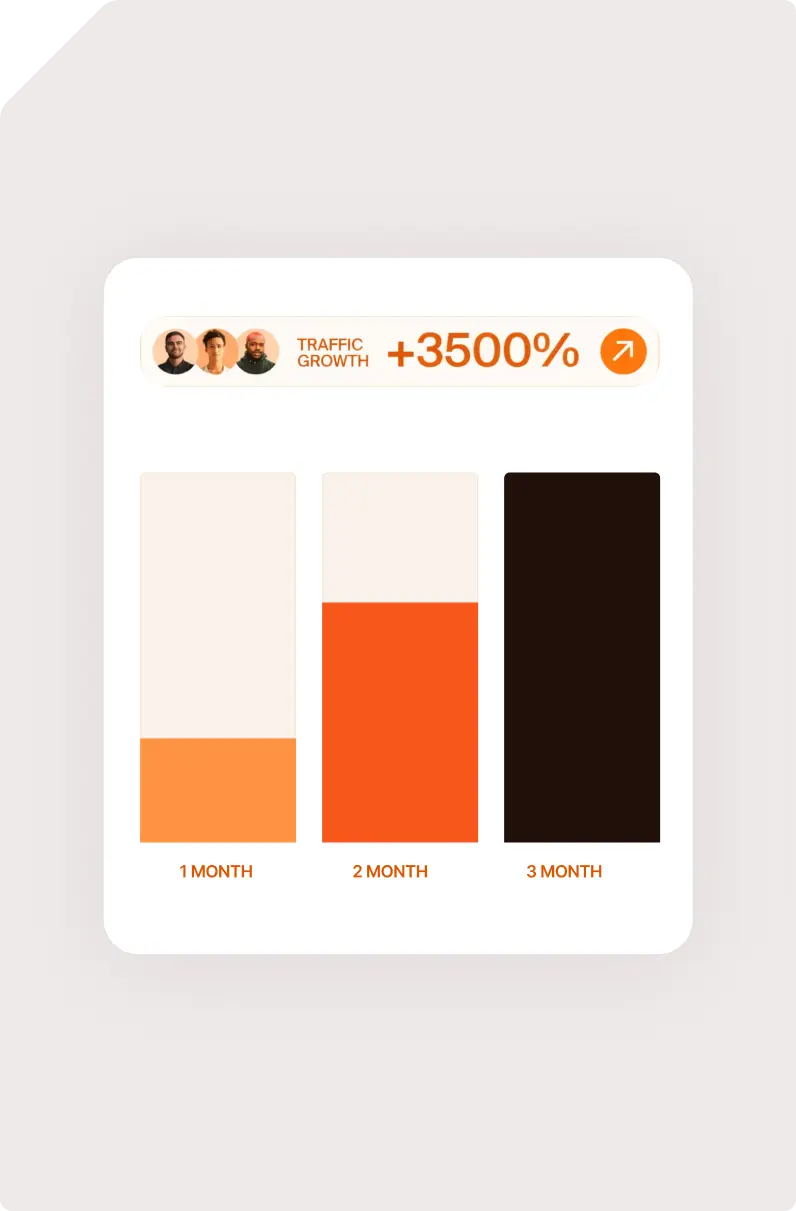
Clients have experienced these results after 6 months
Intent and Keyword Mapping
We assign a clear search intent and target queries to each page so they don’t compete with each other. This keeps relevance high and cannibalization low.
Titles, Meta, and SERP Snippets
We write titles and meta that match intent and earn clicks, not just impressions.
Heading and Content Structure
We make pages easy to scan and accurate to the query.
Internal Linking Strategy
We build a linking spine that guides users to key services and supports relevance.
Content Consolidation and Pruning
We reduce thin and overlapping pages so the best version wins.
FAQs and Conversion Alignment
We answer common questions on the page and make the next step obvious.
Our Methodology
Discovery
We learn your goals, market, and current site, then audit and set baselines.
Strategy & Roadmap
We turn findings into a 90-day plan with clear priorities, owners, and timelines.
Implementation & Execution
We ship fixes and improvements on a steady cadence with QA on each release.
Reporting & Iteration
We review results monthly, adjust the plan, and stack gains that compound.
On-page SEO is everything on the page itself that helps a search engine understand what it covers and helps a human decide to click.
That includes title tags and meta descriptions, H1 to H6 hierarchy, the copy, image alt text, internal links, URL structure, and page-level schema where it earns its place.
The part most teams skip is intent. A page can have a flawless title tag and still lose because it answers a different question than the one being searched. Someone searching "SEO agency Toronto" wants to evaluate providers. Someone searching "how much does SEO cost" wants a number. One page cannot serve both well, and trying usually means it serves neither.
So the work starts by assigning a single clear intent to each page, then building the structure around it. Titles, headings and internal links follow that decision rather than preceding it. Done in the right order, on-page is normally the fastest-moving component of an SEO program.
Keyword and intent mapping first, then titles and meta descriptions, heading structure, copy, internal links, URLs, image alt text and calls to action.
In sequence it runs like this. We map primary and secondary queries to specific pages and flag any overlap, because two pages chasing the same term is the single most common reason neither ranks. Titles and meta descriptions get rewritten so the SERP snippet earns the click rather than just containing the keyword. Headings get restructured so each section answers a real sub-question. Thin sections get expanded, near-duplicate pages get merged, and internal links get added from related content into the pages that actually convert.
We add page-level FAQs where the query set justifies them, which also keeps a page eligible for AI Overview extraction.
What we do not do is bulk-rewrite metadata across a site and call it optimization. On-page only pays when it is tied to a specific query on a specific page. Where pages need merging or retiring, we coordinate with technical SEO so canonicals and redirects are handled properly instead of accumulating.
Both. We rewrite existing pages and write new ones, working from your tone guidelines and routing everything through your approval before it publishes.
On existing pages the usual work is expanding thin sections, restructuring headings around real sub-questions, cutting filler, and adding the specifics that make a page worth citing. Most service pages we inherit run about 60 percent positioning and 40 percent substance. Search rewards the reverse.
For new pages we start from a brief covering the target query, the intent behind it, the sections needed to answer it fully, and the internal links in and out. Where a subject needs genuine expertise, we interview your team rather than researching around them. First-hand detail is the thing competitors cannot copy and answer engines increasingly reward.
If you have an in-house writer, we can supply briefs and edits and let them execute. That is often the better arrangement for an ongoing content program, and it keeps your voice intact.
Intent first, volume second. We group queries by what the searcher is trying to do, assign one primary term and a small secondary set to each page, and check for overlap before anything is published.
The overlap check matters most. Keyword cannibalization happens when two or more pages target the same intent, so Google has to choose between them, often picks the weaker one, or alternates and settles on neither. On most sites we audit, several service and blog pages are quietly competing with each other without anyone noticing.
Volume figures from any tool are estimates, so we treat them as direction rather than fact. The real data arrives from Search Console once pages are live. Queries where you already earn impressions but sit in positions eight to twenty are usually the fastest available wins.
We revise the map quarterly as that query data comes in, rather than treating it as a one-time deliverable filed after onboarding. Where a query needs a page that does not exist yet, it goes into the content roadmap.
Often within two to four weeks, which makes on-page the fastest-moving part of most programs.
The reason is mechanical. Google already crawls your existing pages on a schedule, so a rewritten title, restructured headings or an expanded section gets re-evaluated at the next fetch. You are not waiting for a new URL to be discovered and earn trust from nothing.
The biggest early movers are almost always striking-distance pages, the ones hovering just off page one. They already carry relevance and some authority, so a sharper title and a better-structured answer can lift them onto page one without a single new link.
Compounding takes longer. Internal linking changes, content consolidation and topical depth build over three to six months as Google re-evaluates the relationships between pages rather than each page alone. Brand new pages are the exception and follow the normal SEO timeline, needing authority behind them before they compete.
Yes. On-page work comes standard in every engagement rather than as an add-on, inside monthly programs that begin at $2,500 CAD for less competitive categories.
What varies is volume, not inclusion. A twelve-page service site gets its full page set mapped and rewritten inside the first quarter. A large catalogue or enterprise site needs template-level work instead, because rewriting forty thousand product pages individually is neither possible nor useful.
Price moves with category competition, site size, number of locations, and how much existing content needs rebuilding rather than adjusting. A site with solid copy that only needs restructuring costs less to move than one where every page needs writing from scratch.
If you are comparing quotes, check whether on-page is bundled or billed per page. Per-page pricing tends to reward volume over judgement, which is how sites end up with two hundred optimized pages and no strategy connecting any of them.