Search has changed. Results pages are more crowded, and more searches end without a traditional website click than most teams realize. In SparkToro’s 2024 zero-click research, for every 1,000 Google searches in the U.S., only 360 clicks went to the open web (sites outside Google-owned properties). That does not make SEO less valuable. It makes prioritization more important. (SparkToro 2024 Zero-Click Search Study)
This SEO strategy guide for Canadian businesses is designed to help you start in the right place, avoid common time-wasters, and build a plan you can run with. We focus on practical steps, clear dependencies, and the realities of 2025-era search, including AI Overviews.
At a Glance: The Canadian SEO Priority Stack (2025)
If you want a simple model to guide decisions, use this priority stack. Each layer supports the next.
The Priority Stack (Do These In Order)
- Measurement and baselines (so you can tell what worked)
- Technical eligibility (crawl, index, speed, templates)
- Highest-value pages first (services, products, locations, key categories)
- Local fundamentals (if you serve an area)
- Content that compounds (clusters, refresh cycles, internal linking)
- Authority growth without risk (links, mentions, partnerships)
- AI readiness (structure, entities, citations, schema hygiene)
Google’s own guidance on AI features is clear: there is no special markup or shortcut to appear in AI Overviews. The work is still foundational SEO, plus clear, extractable content. (AI features and your website)
A Simple Decision Tree (Local vs National)
- If you rely on calls, bookings, or walk-ins in a service area: prioritize local + service pages early, alongside technical clean-up.
- If you sell Canada-wide (ecommerce or SaaS): prioritize category/product pages, technical scalability, and a content plan tied to commercial intent.
Quick Start Checklist (First 10 Business Days)
- Set up and validate Google Search Console, GA4, and conversion tracking.
- Confirm the right pages are indexed, and remove obvious blockers (robots, noindex, broken canonicals).
- Fix the top 5 pages that drive revenue or leads (titles, headings, internal links, intent match).
- If you are local: audit your Google Business Profile basics and review flow.
- Choose 3–5 keyword themes and map them to existing pages before creating new ones.
- Create a 30/60/90-day plan with owners, deadlines, and success metrics.
Step 1: Set Business Goals and KPIs (Stop Chasing Rankings)
Rankings can be a useful diagnostic. They are not a strategy. A strategy starts with the business outcome you need, then works backward to what search demand and site performance can support.
What to define (and why it matters)
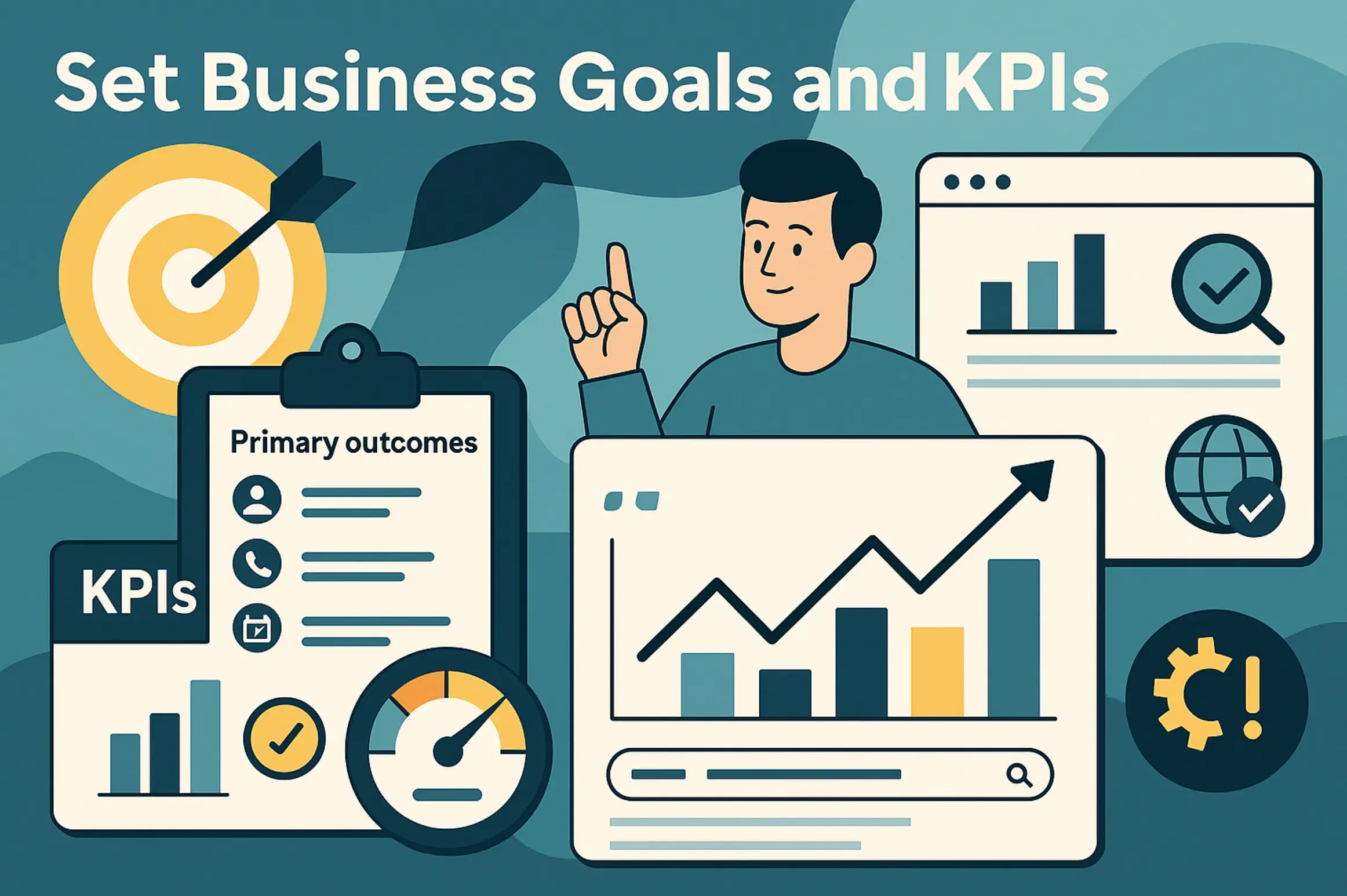
- Primary outcome: leads, calls, demo requests, bookings, or revenue from organic.
- Secondary outcomes: qualified traffic, email signups, engaged sessions, assisted conversions.
- Constraints: budget, internal resources, dev capacity, seasonality, regulatory limitations.
Practical KPI set (use a small, stable dashboard)
Choose 3–6 KPIs you can review monthly without debate:
- Organic leads (form fills, calls, bookings)
- Conversion rate by page type (service pages vs blog)
- Impressions and clicks by topic cluster (Search Console)
- Rankings for a small set of priority queries (as directional signal)
- Index coverage and crawl errors (Search Console)
- Core Web Vitals status for key templates
If a core update causes volatility, Google’s guidance is to focus on improving quality and usefulness rather than chasing the update itself. (Google Search’s core updates)
Step 2: Technical Foundation (Crawl, Index, Speed, Architecture)
Technical SEO is not about chasing perfect scores. It is about removing friction that prevents your best pages from being discovered, understood, and served with a good user experience. If you need a deeper technical review, our technical SEO services focus on audits you can implement and validate.
The four technical questions that matter most
- Can Google crawl the site efficiently?
- Are the right pages indexed, and are the wrong pages kept out?
- Is the site architecture clear (and supported by internal links)?
- Do key templates meet user experience expectations (especially on mobile)?
A technical checklist you can run without overcomplicating it
Indexing and duplication
- Check for accidental noindex, blocked resources, or conflicting canonicals.
- Reduce thin duplicates (tag pages, parameter pages, near-identical location pages).
- Ensure one primary version of each URL (HTTP/HTTPS, www/non-www, trailing slash rules).
Architecture and internal linking
- Make core pages reachable in a few clicks from the homepage or main navigation.
- Use descriptive internal link anchors and avoid orphan pages.
- Build a category-to-detail structure that matches how users search.
Core Web Vitals (template-level, not page-by-page)
Core Web Vitals measure real-world loading, interactivity, and visual stability. Google recommends aiming for good Core Web Vitals to support search success and user experience. Reference: (Understanding Core Web Vitals and Google search results)
A practical approach:
- Identify your top 2–3 templates (home, service/product, blog/article).
- Fix issues at the template level so improvements scale across many URLs.
- Validate using Search Console and field data, not only lab tools.
Step 3: Build a Canadian Keyword + Intent Map
Keyword research is not a list of phrases. It is a map of intent to pages. Your goal is to understand what Canadians search, why they search it, and which page should satisfy that intent.
How to build a usable map
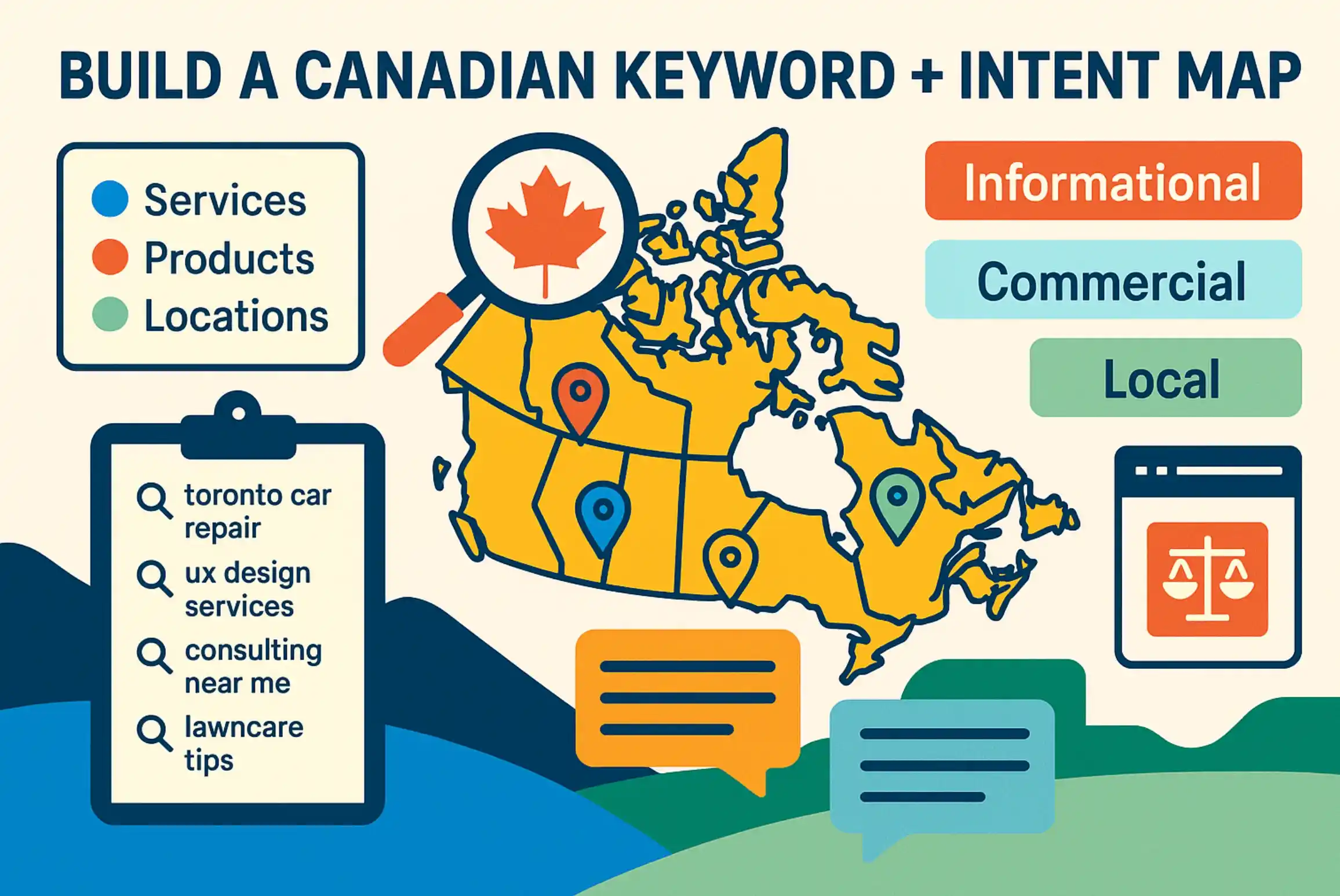
- Start with your offerings: list your services, products, and locations.
- Expand with evidence: Search Console queries, paid search terms, sales call notes, competitor SERPs.
- Group by intent: informational, commercial, transactional, and local.
- Assign one primary page per intent: avoid multiple pages competing for the same job.
Canadian nuance to consider
- City and province modifiers: “Toronto,” “GTA,” “Ontario,” and nearby municipalities can change intent.
- Local language needs: only create French or bilingual pages if your audience and operations support it.
- Search phrasing differences: Canadians may use slightly different terms, but intent still matters more than spelling variants.
A simple “no cannibalization” rule
If two pages target the same intent, pick one to be primary. Consolidate or reposition the other. This reduces internal competition and keeps your internal links clearer.
Step 4: Optimise Your Highest-Value Pages First (On-Page + Internal Links)
Most Canadian businesses should not start by publishing more blog posts. Start by improving the pages that already have the highest commercial value: services, product categories, core product pages, and location pages.
This is where on-page SEO work often produces the fastest quality improvements because it aligns content, structure, and internal linking with what searchers want.
What “highest-value” usually means
- Your top 5–15 services or product categories
- Pages that already receive impressions but have weak click-through or poor conversion
- Pages that sales relies on (pricing, comparisons, “near me” pages, booking pages)
On-page checklist for priority pages
- Title and H1: aligned with the primary intent, clear, and not stuffed.
- Headings: structured to answer questions in a logical order.
- Above-the-fold clarity: who you serve, what you do, and what to do next.
- Proof and trust: reviews, case snippets, certifications, service areas, policies.
- Internal links: link from supportive pages to priority pages using descriptive anchors.
- FAQ-style subsections: use them to satisfy intent and capture “People Also Ask” style queries, even if you do not receive rich results.
Step 5: Content Strategy That Compounds (Clusters + Refreshes)
Content wins when it is tied to strategy, not volume. A good plan builds topical authority over time, supports conversions, and creates internal linking pathways back to your priority pages.
If you want help building and maintaining an editorial system, our content marketing services focus on strategy, briefs, and publishing that supports measurable outcomes.
The cluster model (simple, durable)
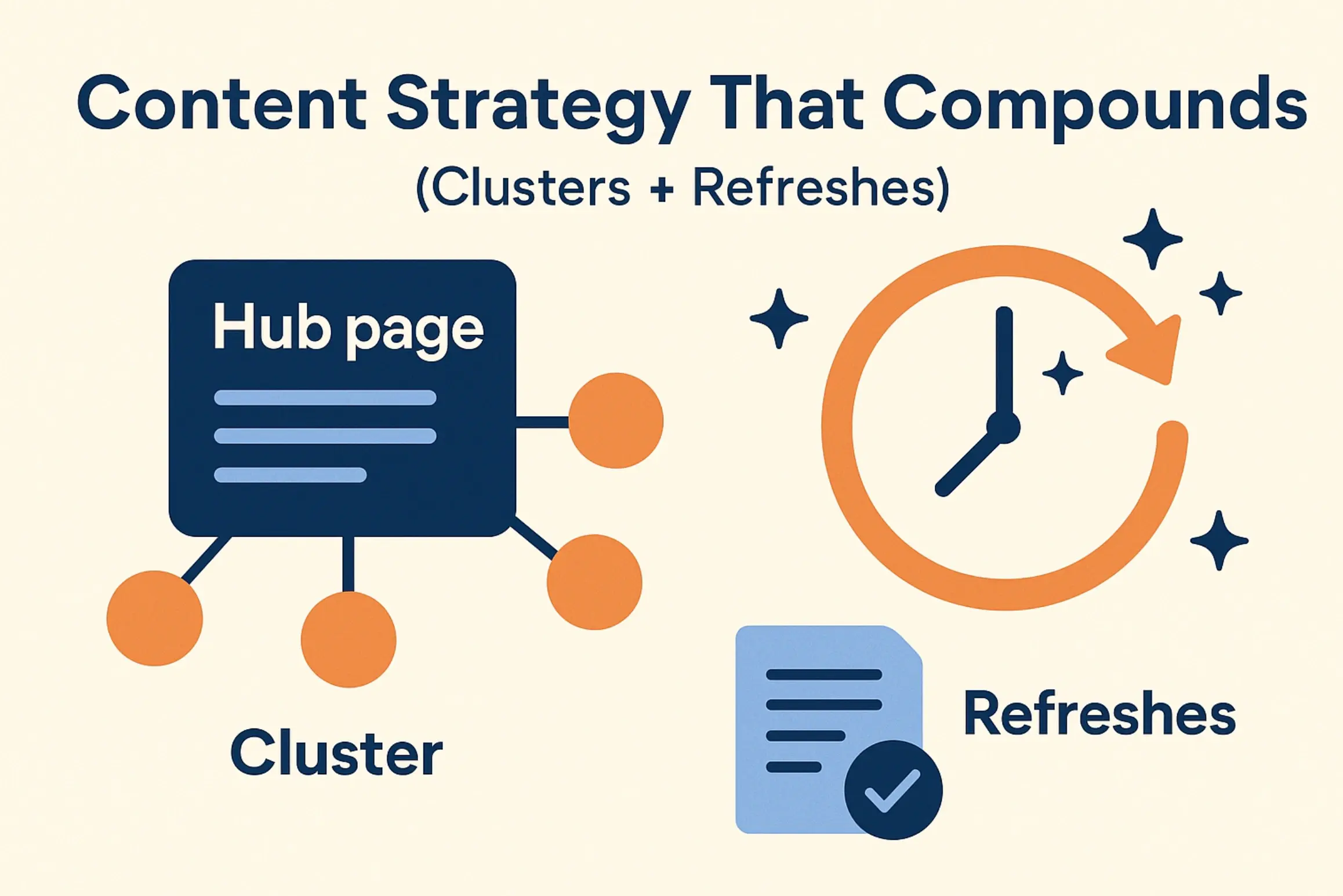
Pick 3–5 core themes that match your offerings. For each theme:
- Create one strong “hub” page (often a service or category page).
- Publish supporting articles that answer specific questions and link back to the hub.
- Refresh the hub and the strongest supporting articles quarterly.
Refreshes often beat net-new content
Before you write anything new, review what already exists:
- Pages sitting in positions 6–20 with stable impressions are refresh candidates.
- Improve structure, add missing subtopics, update examples, tighten internal links.
- Validate changes in Search Console over 4–8 weeks.
For quality alignment, Google’s guidance is useful as a checklist: Creating helpful, reliable, people-first content.
Step 6: Local SEO Priorities (If You Serve an Area)
If you serve a geographic area, local SEO is not optional. It often determines whether you show up for high-intent searches that convert quickly.
A good local strategy has three parts: your Google Business Profile, your website’s local relevance, and your reputation signals. We cover this in more depth in our local SEO services.
What Google says drives local rankings
Google’s guidance highlights three main factors: relevance, distance, and prominence. (Tips to improve your local ranking on Google)
Google Business Profile priorities (practical, not exhaustive)
- Choose accurate categories and services that match how people search.
- Add photos that reflect your actual location, team, and work.
- Use posts and Q&A to address recurring questions.
- Build a review request process that is consistent and policy-compliant.
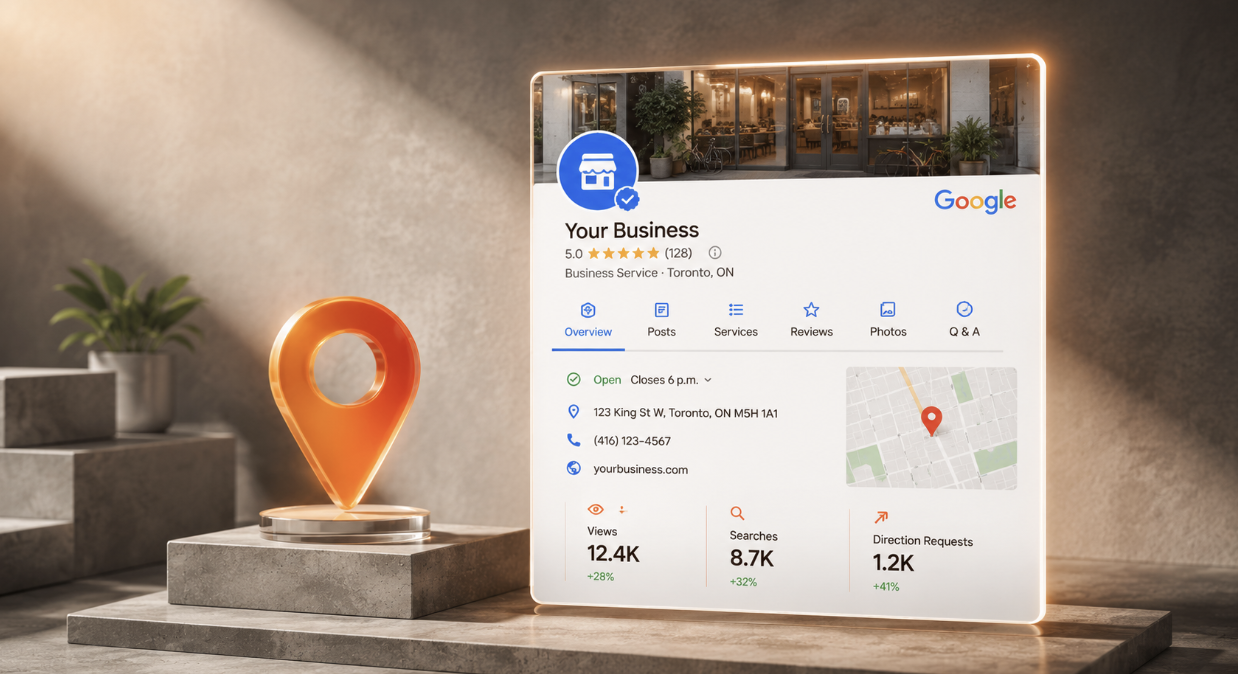
- Track actions (calls, directions, website clicks) and compare against lead volume.
Website actions that support local performance
- Build location or service-area pages that are truly unique, not templated duplicates.
- Add clear service area information, hours, and contact details.
- Ensure NAP details are consistent across your site and key listings.
Step 7: Authority Without Risk (Off-Page SEO + Digital PR)
Authority is not a list of backlinks. It is a pattern of credible mentions and references that show you are real, trusted, and relevant. The wrong tactics can also create risk.
Google’s stance is straightforward: tactics intended to manipulate rankings can violate policies and lead to demotions or manual actions. (Spam policies for Google Web Search)
If you want a strategy that prioritizes relevance and safety, our off-page SEO services focus on link earning, digital PR, and reputation support.
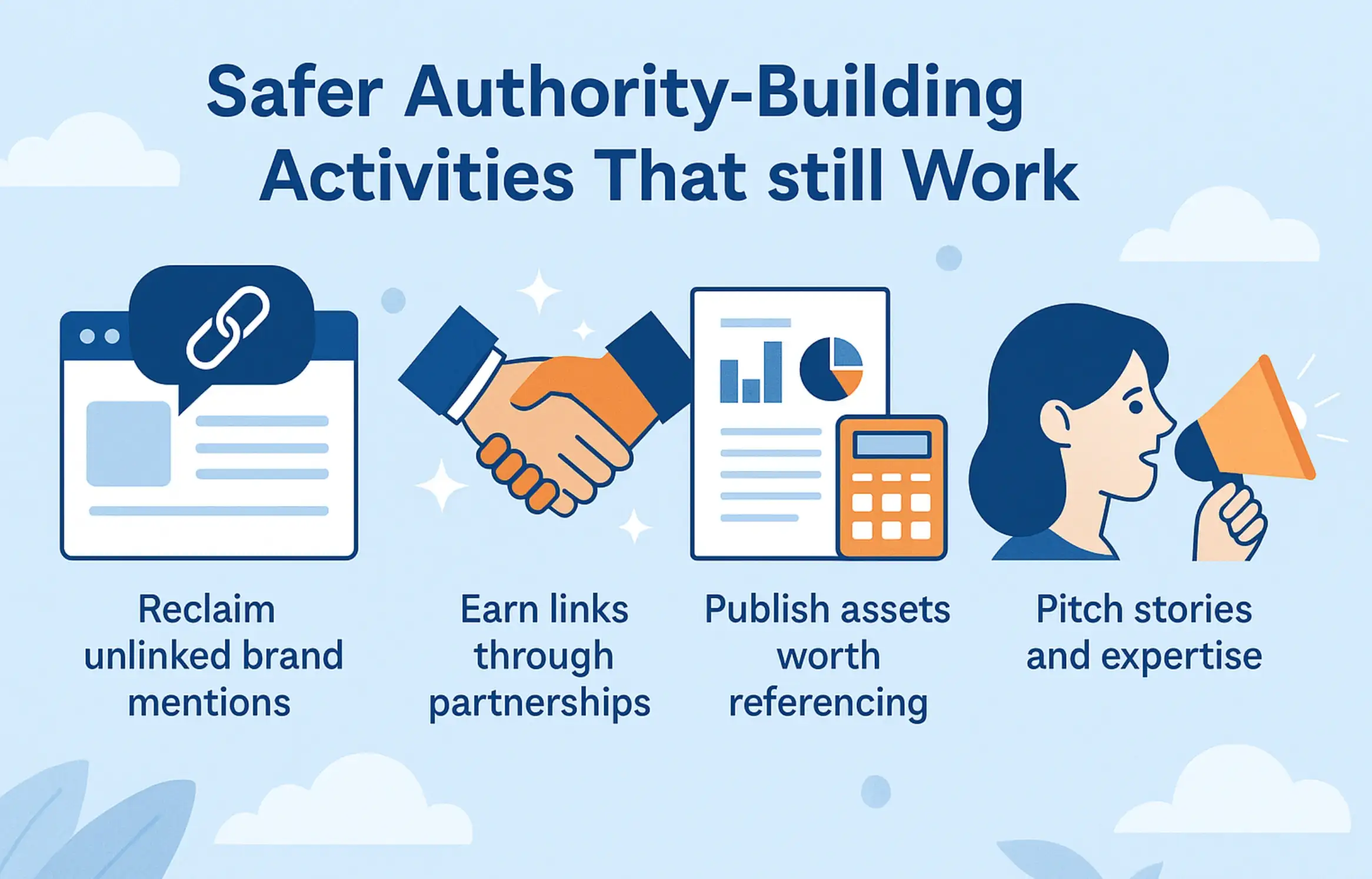
Safer authority-building activities that still work
- Reclaim unlinked brand mentions by asking for a citation link.
- Earn links through partnerships, suppliers, associations, and community involvement.
- Publish assets worth referencing: original data, clear calculators, strong guides, helpful templates.
- Pitch stories and expertise where your business has real credibility.
A risk filter to apply to any link opportunity
- Is it editorial, or is it paid and disguised?
- Is the site relevant to your industry or geography?
- Would you be comfortable explaining the link publicly?
- Does it add value to users, or only attempt to influence rankings?
Step 8: AI Search & AI Overviews Readiness (2025 Reality)
AI Overviews change how information is surfaced, but the foundation remains the same: indexed pages, clear content, and trustworthy signals.
Google’s guidance is worth reading directly: AI features and your website. The key takeaway is simple. Focus on SEO fundamentals and clarity. There is no special tag that guarantees inclusion.
If you want a structured way to prepare your site for AI-driven search surfaces, our AI readiness service focuses on content structure, entity consistency, and technical eligibility.
What “AI readiness” means in practical terms
- Extractable answers: clear headings, concise definitions, and sections that stand alone.
- Entity clarity: consistent business details, services, locations, and terminology across your site.
- Citations and sourcing: reference primary sources when you make claims.
- Schema hygiene: use structured data only where it is accurate and supported by the page.
A simple format that improves extractability
For key questions, use:
- A question-style subheading
- A 2–3 sentence direct answer
- A short list or checklist
- Supporting detail below
This format tends to work well for featured snippets, “People Also Ask,” and AI summary systems that prefer clear passages.
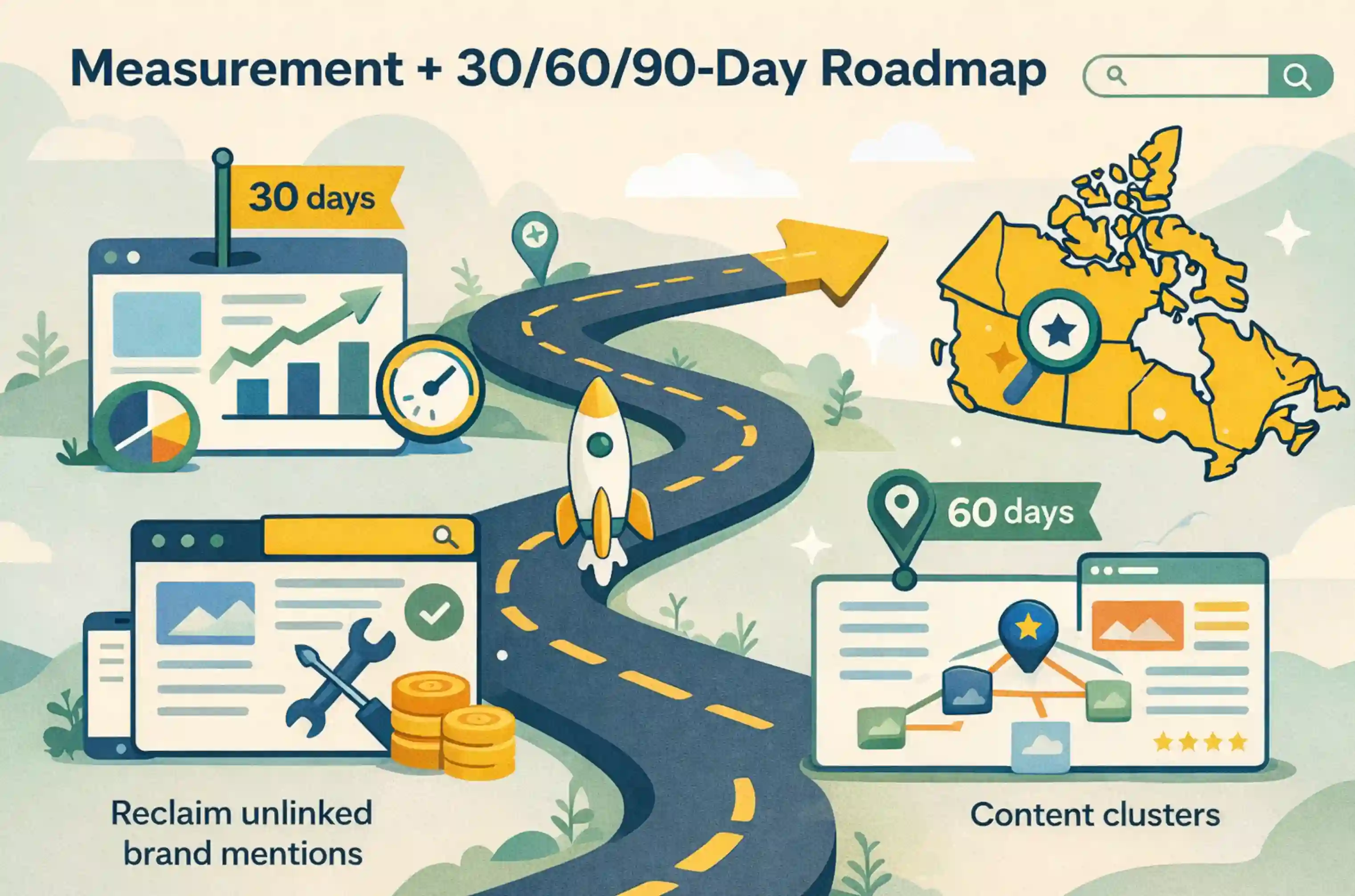
Step 9: Measurement + 30/60/90-Day Roadmap
A roadmap turns “we should do SEO” into a system with owners, timelines, and evidence. It also prevents the most common failure mode: jumping to content production before the foundation is ready.
30 days: Build the base and fix what blocks progress
Goals
- Baseline performance and conversions
- Clear technical eligibility for key pages
- Quick on-page improvements on priority pages
Actions
- Validate analytics, conversions, and Search Console data.
- Fix indexing issues and reduce duplication.
- Improve titles, headings, and internal links on the top pages.
60 days: Expand reach with intent-driven content and local strength
Goals
- Better coverage of high-intent queries
- Stronger local presence (if applicable)
- A working content production system
Actions
- Publish or refresh content around 2–3 clusters.
- Build internal links from supporting content back to priority pages.
- Strengthen Google Business Profile content and review velocity.
90 days: Build durable authority and improve what is already working
Goals
- Better conversion performance from organic traffic
- Early authority signals and stronger topical trust
- A repeatable measurement loop
Actions
- Launch a safe authority plan (reclaim mentions, partnerships, digital PR angles).
- Refresh pages with impressions but weak clicks.
- Review performance by template and by cluster, then iterate.
Mini example (anonymized, common pattern)
A Toronto-area home services company came to us after months of blog publishing with limited lead growth. The site had index bloat from duplicate service-area pages and weak internal links to the core service pages.
The first 30 days focused on technical clean-up and rewriting the top service pages to match search intent, with clearer headings and trust elements. By day 90, the content plan shifted to a small cluster around “emergency” and “maintenance” queries, linked tightly back to the revenue pages, while authority work focused on local partnerships and unlinked mention reclamation.
Common Mistakes to Avoid (Canadian Edition)
These issues are common across Canadian businesses, especially when SEO is treated as a checklist rather than a strategy.
Publishing more content while technical issues remain
If indexing is messy and templates are slow, adding more URLs can amplify the problem. Start with crawl, index, and template-level fixes first.
Treating local SEO as a single task
Local performance is a system: Google Business Profile, reviews, citations, and local relevance on the site. Weakness in any part often limits results.
Building thin, duplicated location pages
If every page is the same with a city name swapped, it rarely creates value and can create quality risks. Make local pages genuinely useful or consolidate.
Ignoring internal linking and page hierarchy
Many sites have good content that does not rank because it is isolated. Internal links are how you signal what matters.
Over-relying on risky link tactics
If a tactic exists only to manipulate rankings, it likely conflicts with Google’s policies. Use the risk filter, and keep your plan aligned with official guidance. (Google Developer's Blog)
Expecting AI Overviews to be “optimized” with one trick
Google’s AI documentation emphasizes foundational eligibility and helpful content. Put energy into clarity, structure, and trust, not shortcuts. (AI features and your website)
If you want a clear priority plan tailored to your site, including technical requirements, content structure, and AI-driven SERP realities, explore our AI readiness service.