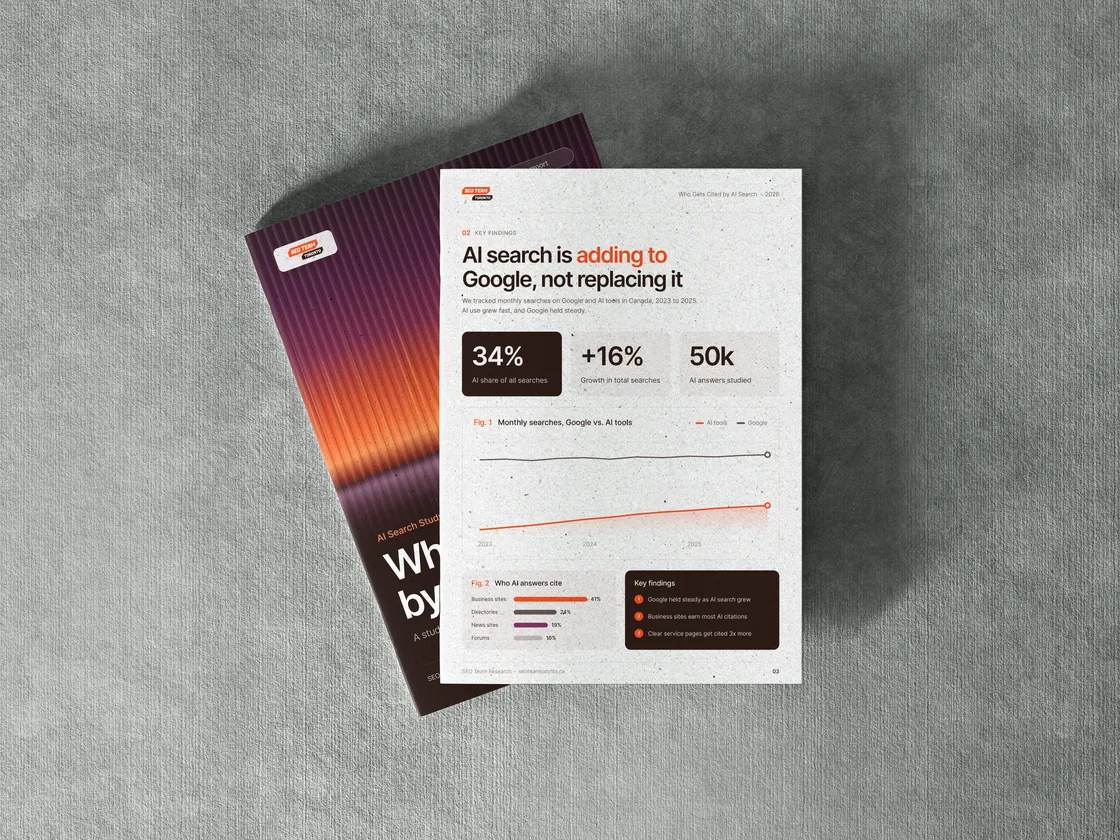





The hardest industries for SEO in 2026 are the ones where trust, competition, and SERP real estate all collide. That usually means legal, healthcare, finance, and high-value local services, plus categories where marketplaces and directories control page one.
This guide breaks down which industries are toughest, why they are tough, and what a practical plan looks like in 2026. You will also get a simple scoring model you can use to set expectations and choose the right first moves for your market in Toronto, the GTA, and across Canada.
The Hardest SEO Industries in 2026 (At-a-Glance)
If you want the short version, these are consistently among the most difficult industries to win in organic search in 2026:
- Personal injury and high-stakes legal services (intense competition, high trust bar, heavy ads, aggressive link landscape)
- Dentistry and multi-location healthcare clinics (local pack pressure, many near-duplicate location pages, review competition)
- Cosmetic medicine, dermatology, and elective procedures (YMYL sensitivity, reputation signals, competitive local SERPs)
- Mental health and addiction treatment (YMYL sensitivity, strict scrutiny on claims, reputation and trust signals matter)
- Finance, insurance, investing, and mortgages (YMYL, compliance, comparison-heavy SERPs, aggregator dominance)
- Real estate agents and brokerages (marketplaces and portals, local competition, fast-changing listings intent)
- Home services: HVAC, plumbing, roofing, pest control (local pack, lead-gen networks, high ad density, review velocity)
- Travel and hospitality (OTAs and aggregators, SERP features, thin margins on organic clicks)
- Staffing, recruiting, and job-related queries (aggregators dominate, intent shifts quickly, content commoditization)
- Commodity e-commerce (thin differentiation, price comparison behavior, technical scale challenges)
- SaaS and B2B software categories (review sites, comparison intent, content arms race, authority gap)
A quick way to think about “hardest” is this: the difficulty rises when the SERP has less room for a simple blue-link answer. If ads, AI summaries, local packs, and big aggregators absorb attention, SEO requires stronger differentiation and cleaner execution.
Why SEO Feels Harder in 2026
SEO has not stopped working. It has become less forgiving.
Three shifts are driving that feeling across almost every competitive industry:
- More zero-click behavior
Many searches now end without a click to the open web. SparkToro’s 2024 analysis with Datos estimated that only 360 clicks per 1,000 searches in the US go to the open web, with the rest ending in no click or staying within Google properties (SparkToro study). - AI Overviews reduce organic click opportunity
AI Overviews can answer a query before the user needs to visit a site. Ahrefs updated its research in February 2026 and reported that the presence of an AI Overview correlates with a 58% lower average clickthrough rate for the top-ranking page (Ahrefs update). - AI Overviews are moving down the funnel
Semrush’s 10M-keyword study suggests AI Overviews are expanding beyond purely informational queries and showing up more often on commercial and transactional intent over time (Semrush study). When that shift hits your category, the “classic” playbook of ranking for top-of-funnel terms and relying on clicks becomes less predictable.
Google’s own guidance is also worth keeping in mind. From a site owner perspective, Google states there are no special optimizations required to appear in AI features, and that eligibility and serving are not guaranteed (AI features documentation). In practice, that means the work is still fundamentals, just with higher standards.
At the same time, Google is clearer than ever about what it does not want. Scaling low-value pages and thin rewrites is explicitly called out as spam, including “using generative AI tools to generate many pages without adding value for users” (Spam policies).
The result in 2026 is a simple reality: competitive industries do not reward volume. They reward credibility, technical cleanliness, and pages that actually help a buyer make a decision.

How We Define “Hardest”: The 2026 SEO Difficulty Score (Framework)
“Hard” is not one thing. It is a mix of competitive pressure, trust requirements, and how crowded the results page is.
Here is the model we use when we assess whether an industry is genuinely hard, and which levers matter most.
Step 1: Score Each Factor From 1 to 5
1) SERP Real Estate Pressure (1 to 5)
How much of page one is consumed by ads, local packs, AI Overviews, shopping units, and “People Also Ask”?
- 1: Mostly classic organic results
- 5: Organic links pushed far down the page
2) Trust and Safety Barrier (1 to 5)
Is the topic YMYL or adjacent to health, finance, legal, or safety? Are claims scrutinized?
- 1: Low-risk informational content
- 5: High-stakes decisions and compliance constraints
3) Competitive Authority Density (1 to 5)
How many credible competitors already have strong topical authority and link profiles?
- 1: Few serious competitors
- 5: Many established brands and publishers
4) Aggregator and Marketplace Dominance (1 to 5)
Do directories and platforms control discovery (and rankings)?
- 1: Brand sites dominate the SERP
- 5: Aggregators own most results
5) Differentiation Difficulty (1 to 5)
Can you offer information that is meaningfully different, or is everything commoditized?
- 1: Clear unique angle exists
- 5: Same services, same claims, same content everywhere
6) Technical and Scale Friction (1 to 5)
How hard is it to keep the site crawlable, fast, and clean as it grows?
- 1: Small site, clean templates
- 5: Complex architecture, many locations/products, index bloat risk
Step 2: Add It Up
- 6 to 12: Moderate difficulty
- 13 to 20: Hard
- 21 to 30: Very hard
Step 3: Use the Score to Choose Strategy, Not Just Budget
A higher score does not mean “do more SEO.” It means you must do fewer things, better.
- If trust barrier is high, invest in credibility signals and content quality before you scale. Google’s own guidance emphasizes originality, completeness, and people-first usefulness (Google for Developers).
- If SERP pressure is high, prioritize pages and queries where a click is still likely (local intent, pricing, comparisons, “near me,” brand-plus-service).
- If aggregators dominate, build a wedge. Win the subset of intent they cannot satisfy well, and make your brand the destination once interest is earned.
A Toronto example: “personal injury lawyer Toronto” tends to score near the top across trust barrier, SERP pressure, and authority density. That does not mean it is impossible. It means you need a longer runway, stronger proof, and better governance over content and links.
YMYL and Regulated Industries
In regulated or high-stakes industries, “ranking” is only part of the problem. The deeper challenge is earning trust signals that satisfy both users and search systems.
Google’s guidance for creators repeatedly points back to two themes: people-first usefulness and reliable, original information (Google for Developers). In 2026, those themes hit hardest in YMYL categories.
Legal SEO in 2026: Trust, Authority, and Risk Control
Why it is hard
Legal search is high value and aggressively competitive. SERPs are often crowded with ads, directories, and established firms with deep content libraries.
What works in practice
- Build practice-area hubs that cover the service end-to-end, then support them with focused FAQs and local modifiers.
- Make proof easy to find: clear firm information, transparent contact details, and content that answers real client questions without overpromising.
- Treat off-page growth as a governance problem. In legal, risky link tactics are common, and cleaning up later is expensive.
Common failure pattern
Publishing dozens of near-duplicate “location + practice” pages with thin copy. That looks like scale, but it often performs like spam.
Healthcare and Clinics: Expertise Signals and Safety
Why it is hard
Healthcare content can be heavily scrutinized, and users are sensitive to credibility. Search engines tend to be cautious around medical claims.
What works in practice
- Create pages that focus on decision support, not just definitions. Patients search with specific concerns and constraints.
- Use clear author and reviewer signals where appropriate, and make your clinic details unambiguous.
- Avoid broad, generic medical advice. Instead, explain your process, what to expect, and how to choose a provider responsibly.
Common failure pattern
Overproducing blog content that reads like rewritten web summaries. Google’s spam policies explicitly call out scaled content abuse and unoriginal mass production (Google dor Developers).
Finance and Insurance: Compliance, Comparisons, and Credibility
Why it is hard
Finance queries are both high value and comparison heavy. Aggregators often dominate the SERP, and compliance limits what you can claim.
What works in practice
- Focus on situational pages that match real decision paths (for example, “mortgage options for self-employed buyers” rather than generic “mortgage rates” pages).
- Build content that explains tradeoffs clearly, with plain-language definitions and tight structure.
- Plan for reputation and authority building as a long-term program, not a one-time campaign.
Local High-LTV Services
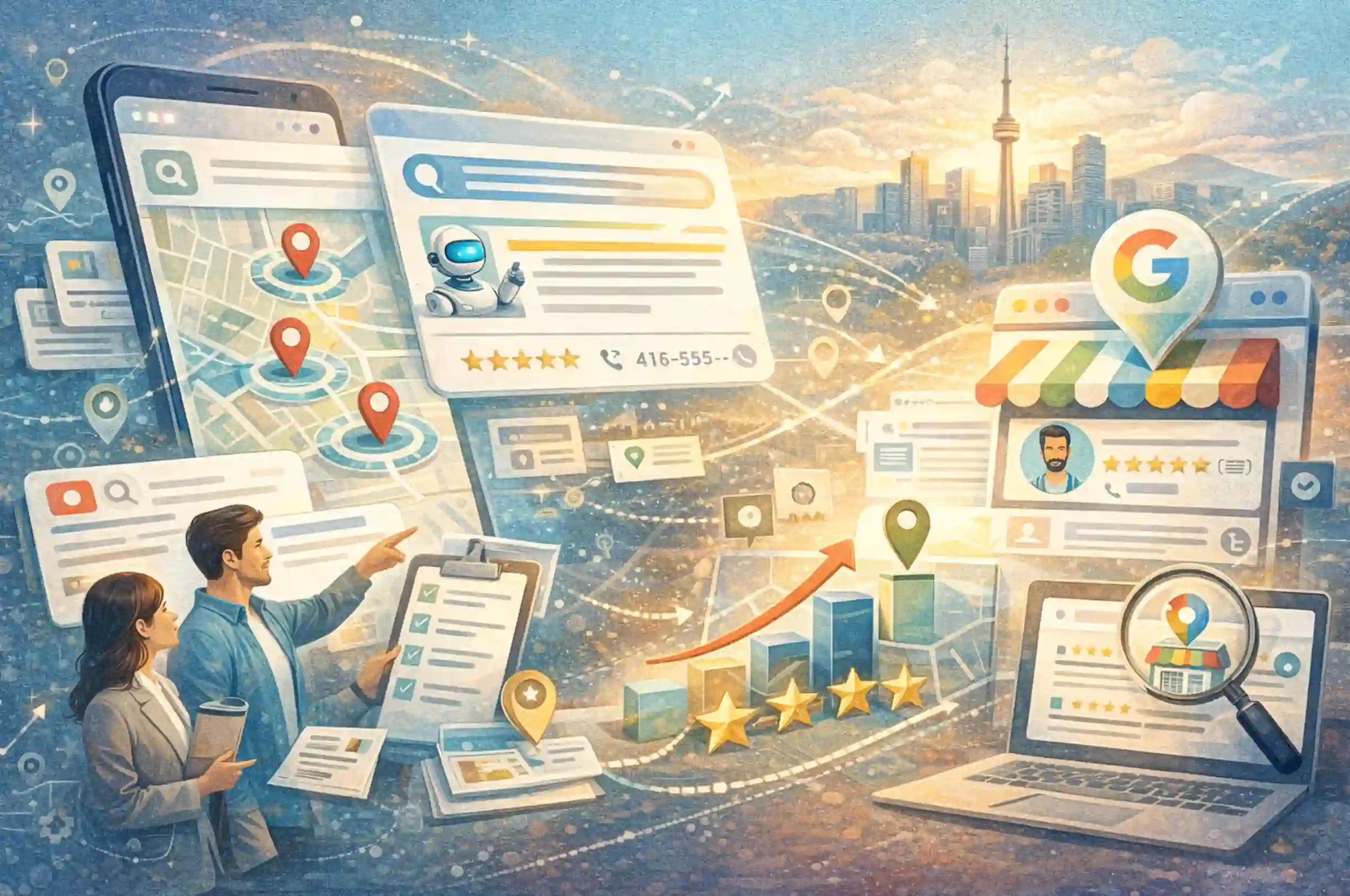
In Toronto and the GTA, local SEO is rarely “set it and forget it.” High-LTV local services attract constant competition, and the map pack can be the primary battleground.
What Makes Local Service SEO Difficult in Toronto
The mix of intent is complex
Users often jump between “near me,” neighborhood queries, and brand comparisons. If your site does not map those intents to the right pages, rankings and conversions are both unstable.
The map pack changes the math
In many categories, a strong map presence can drive calls even when organic links are pushed down. That makes local visibility, reviews, and location pages part of the same system.
Multi-location creates duplication risk
Many service businesses scale by adding locations, then duplicating the same page eight times with a city name swapped in. That rarely earns trust.
If local is the core channel for your business, a focused local SEO program should align your Google Business Profile, citations, reviews, and on-site location pages into one coherent footprint.
Mini Example: Cleaning Up a Multi-Location Clinic Footprint (Anonymized)
A GTA-based clinic group came to us with multiple locations and a familiar pattern: thin location pages, inconsistent services listed across profiles, and slow templates that made the site hard to use on mobile.
We started by standardizing location data and tightening what each location page was responsible for. Then we rebuilt the template so each page could carry unique service context, clear CTAs, and better internal navigation.
The early signal we look for in cases like this is not a promise of rankings. It is cleaner indexing, broader impressions for non-brand local queries, and steadier call volume attribution at the location level.
Aggregator and Marketplace-Dominated SERPs
Some industries are “hard” because you are not only competing with other businesses. You are competing with the platforms where customers start.
Typical examples include travel, job-related queries, real estate listings intent, and many B2B software searches. In these SERPs, the top results are often directories, marketplaces, and review sites.
When Directories Own Page One
Aggregators win because they offer:
- inventory or listings at scale
- built-in comparison features
- strong brand recognition
- massive link profiles
If you try to copy their format, you will usually lose. You do not have their data and you do not have their engagement signals.
The Wedge Strategy: Win the Query They Don’t Want
The practical approach is to win where the aggregator is weak:
- local nuance (neighborhood-specific service detail, true coverage, what to expect)
- process transparency (how pricing works, what affects cost, what to ask before you buy)
- expert-led guidance that a template directory cannot write credibly
In aggregator-heavy categories, authority building is rarely optional. You need consistent link earning and brand mentions that are relevant and safe, not volume for its own sake. That is where off-page SEO and digital PR becomes a long-term advantage.
Commodity E-Commerce Categories
Commodity e-commerce is hard for a different reason: differentiation is thin, and technical scale problems quietly sabotage performance.
You can have good products and still struggle if search engines can’t crawl the right pages efficiently, or if your site generates thousands of near-duplicate URLs through filters and parameters.
Common SEO Failure Modes in E-Commerce
- Index bloat from faceted navigation and internal search pages
- Duplicate category pages that split authority
- Weak internal linking that hides important collections
- Slow templates and heavy scripts that reduce usability
- Thin category content that adds no buying help
What a Competitive E-Commerce Baseline Looks Like
- A site that search engines can crawl predictably, with clean canonicals and controlled indexation
- Collection and category pages that answer buyer intent clearly
- Strong internal linking so the right products are easy to discover
- Performance and Core Web Vitals treated as part of conversion, not a technical side quest
If your store is competing in a dense category, start with the technical SEO foundation so content and links have something stable to stand on.
SaaS and B2B Software
SaaS SEO is often difficult even when the product is strong. The SERP is defensive.
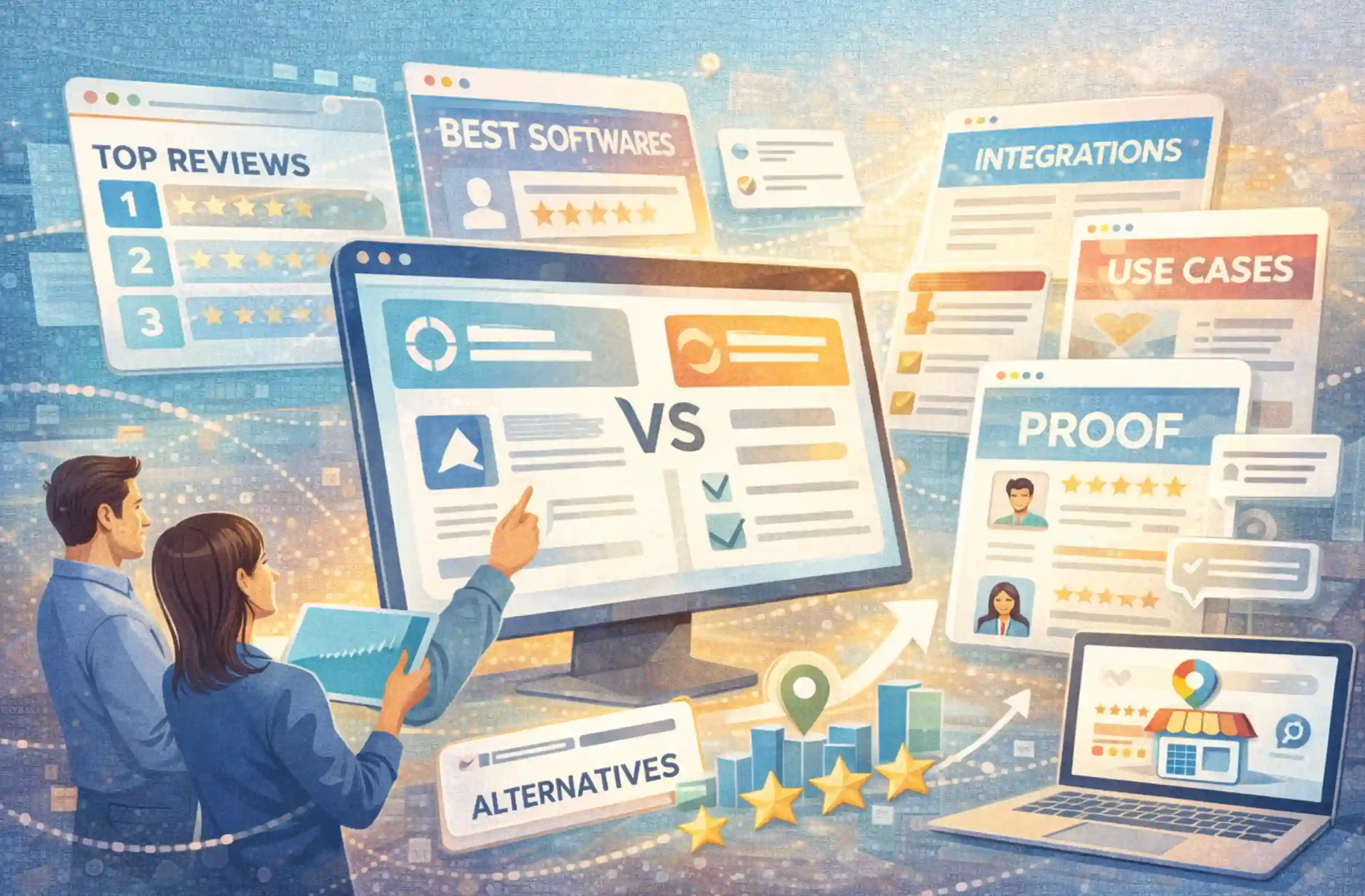
Review sites, “best software” lists, and comparison pages absorb demand early. Then brand searches and demo intent dominate later. That means your content strategy has to support evaluation, not just awareness.
Why SaaS SERPs Are So Defensive
- Buyers want comparisons, not definitions
- Many queries trigger listicles and review pages
- Competitors publish at high volume and refresh often
- Product-led growth creates a constant stream of new “integration” and “use case” pages across the market
Content That Earns Pipeline, Not Just Traffic
The strongest SaaS programs usually include:
- comparison and alternatives pages that are fair and specific
- “use case” pages tied to real roles and industries
- integration pages that solve setup and workflow questions
- proof pages that reduce risk without hype
Execution matters. Page intent, titles, headings, and internal linking have to make the “right page” obvious to both users and crawlers. That is the core of on-page SEO execution.
Winning Playbook: What to Do First (0 to 30 / 31 to 90 / 3 to 12 Months)
In the hardest industries, the difference is rarely a single tactic. It is sequencing and quality control.
Below is the roadmap we use to reduce wasted effort and avoid risky shortcuts.
Phase 1: Days 0 to 30 (Diagnostics and Foundations)
Your goal in the first month is clarity and stability.
- Establish baselines (rankings, conversions, indexed pages, local visibility, brand demand).
- Fix technical blockers that prevent crawling, indexing, and performance improvements.
- Build a page map so each query type has a clear home and cannibalization risk drops.
- Identify the specific SERP features that are stealing clicks in your category, then prioritize around them.
If you do not have clear page roles and clean technical signals, scaling content usually multiplies confusion.
Phase 2: Days 31 to 90 (Build the Assets That Can Win)
This is the period where you create the minimum viable set of pages that can compete.
- Build or rebuild your top money pages so they match intent and remove ambiguity.
- Create one strong pillar or hub per priority service line, supported by focused FAQs.
- Add proof and trust elements where relevant: case-style examples, process detail, clear contact and service information.
- Start a steady, governance-driven off-page program so authority grows safely.
Most teams underestimate how much structure matters in competitive SERPs. That is why we treat content marketing strategy as planning and production, not just publishing.
Phase 3: Months 3 to 12 (Scale, Refresh, and Defend)
In hard industries, compounding comes from iteration.
- Refresh winners based on query shifts, competitor movement, and AI summary patterns.
- Expand into long-tail and “decision support” topics where AI summaries still cite sources.
- Consolidate overlaps so authority concentrates instead of spreading thin.
- Keep technical hygiene and internal linking clean as the site grows.
Competitive Industry SEO Checklist (Practical)
Use this as a quick self-audit. If you can’t confidently check most of these boxes, your industry will feel harder than it needs to.
- Core service pages map cleanly to intent, with no internal duplicates
- Each service has a hub and supporting FAQs that reduce “thin page” risk
- Location pages are unique and useful, not city-name swaps
- Internal linking makes priority pages easy to reach within a few clicks
- Site performance is consistently strong across templates
- Index bloat is controlled (filters, parameters, internal search, duplicates)
- Proof and credibility are explicit (who you are, what you do, how you do it)
- Off-page growth follows a consistent process and avoids manipulation
- Reviews and reputation signals are treated as part of organic strategy
- Reporting ties SEO work to qualified actions, not only rankings
Measurement: KPIs That Still Matter in 2026
In 2026, rankings alone are not a satisfying KPI, especially in SERPs impacted by AI Overviews and zero-click behavior.
Here are the measurements we still trust in competitive industries:
- Search Console trends that indicate real opportunity: impressions growth on non-brand terms, query breadth, and stable average position across clusters
- Conversion metrics: calls, forms, booked consults, qualified leads, revenue or pipeline where tracking allows
- Share of visibility for priority topics: how often you appear in the top set of results across your most important query groups
- Local outcomes: calls, direction requests, and engagement tied to each location
- Brand demand: growth in branded searches over time, especially when top-of-funnel clicks are less reliable
- Authority signals: relevant referring domains and editorial mentions that correlate with better performance across clusters
- AI visibility where it matters: whether your pages are being surfaced and cited when AI features appear
Google’s guidance reinforces that AI features still rely on the same fundamentals, and that there is no guaranteed path to being shown (AI features documentation). That is exactly why measurement should focus on durable business outcomes and the leading indicators that drive them.
FAQ
What is the hardest industry for SEO in 2026?
The hardest industries are typically legal, healthcare, finance, and high-LTV local services, especially in major cities like Toronto. These categories combine strict trust expectations with aggressive competition and crowded SERPs.
Is SEO still worth it with AI Overviews and more zero-click searches?
SEO is still worth it, but the strategy changes. You want to target queries where a click is still likely, strengthen brand demand, and build pages that help users make decisions instead of just summarizing information.
Why are law and healthcare SEO so slow compared to other industries?
The trust bar is higher and the competition is usually stronger. You often need better proof, more complete topic coverage, and a longer runway for authority building.
Do backlinks still matter in competitive niches?
Yes, but quality and relevance matter far more than volume. In hard industries, unsafe link tactics create risk and volatility that can erase progress.
How long does SEO take in highly competitive industries?
Timelines depend on your starting point, competition, and resources. In harder categories, expect progress to come from sequencing and consistent execution, not a quick publish cycle.
Should local businesses focus on maps or organic rankings first?
If most leads come from nearby searches, maps and organic should be treated as one system. That means aligning your Google Business Profile, reviews, citations, and location pages, not picking only one.
What causes keyword cannibalization in service industries?
Cannibalization usually comes from multiple pages targeting the same intent, or location pages that all say the same thing. A clear page map and stronger on-page intent alignment reduces this quickly.
Can we use AI to produce content safely in 2026?
AI can help with research support and drafting, but publishing scaled, unoriginal pages is risky. Google explicitly calls out scaled content abuse, including mass-producing pages without adding value (Google for Developers).
What does “AI readiness” mean for SEO?
AI readiness means structuring content, entities, and technical signals so your pages are eligible to be cited in AI summaries and assistant answers, while keeping classic rankings strong. It is not a shortcut and it does not guarantee inclusion.
What is the best first step if we are in a tough industry?
Start with a diagnostic that produces a clear sequence: technical issues, page map, content gaps, authority plan, and measurement. Without that structure, effort tends to scatter and results get harder to predict.
Get a Competitive-Industry SEO Roadmap
If you operate in one of the hardest industries for SEO in 2026, the fastest way to reduce uncertainty is a clear plan that prioritizes what matters and avoids risky shortcuts.
If you want help building that plan, start with our AI readiness for SEO service and we will map your best opportunities across classic rankings, local intent, and AI-driven SERP features.