






A detailed search can reveal what someone needs, but it does not automatically make that search worth targeting. Long tail keywords are queries used relatively infrequently compared with more popular searches. Finding useful opportunities means checking whether your business can meet the need behind the wording and deciding which page should answer it.
For a Toronto business, this research supports an organic growth strategy by connecting search engine optimisation, or SEO, to relevant customer needs. The aim is to make informed content decisions, with a clear reason for improving an existing page or creating something new.
What Makes a Keyword Long Tail?
Imagine arranging search queries from the most frequently used to the least frequently used. Popular terms occupy the head of the distribution, while less common searches extend into its tail. Microsoft Research’s study of common and rare queries examines that distinction through search frequency. Published in 2007, it provides historical context rather than current Canadian demand figures.
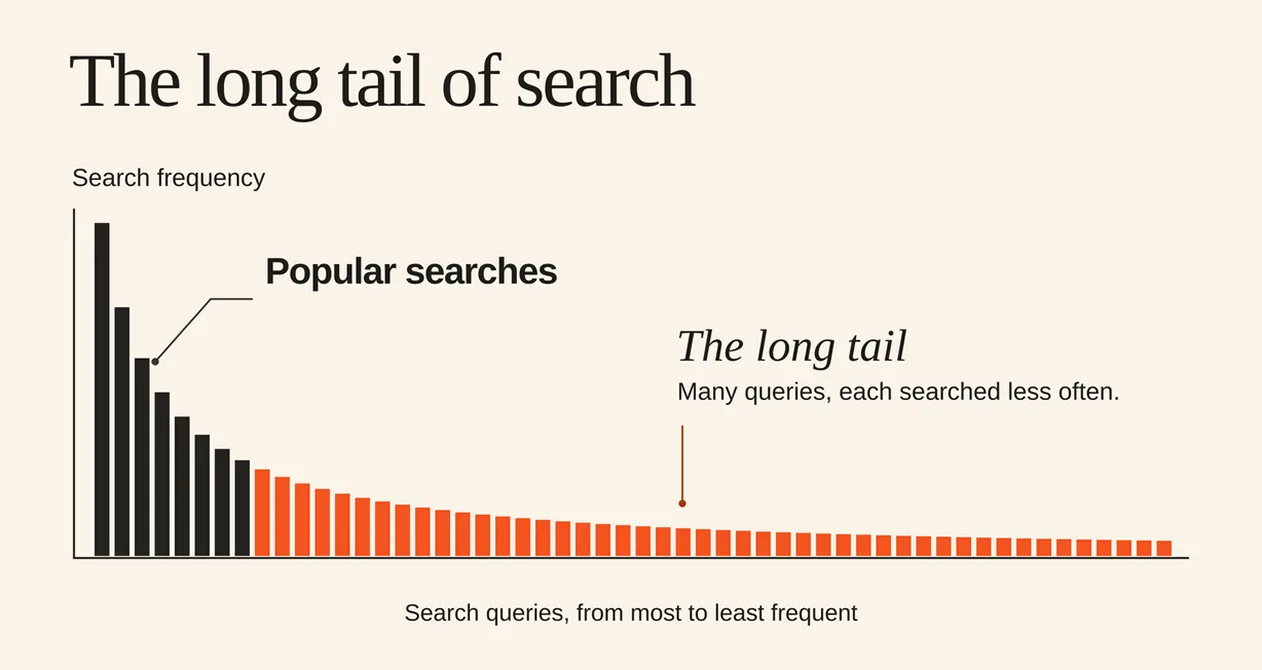
Long tail keywords cannot therefore be identified simply by counting words. A longer phrase may describe a specific need, but its wording alone does not establish search demand, competition or readiness to buy.
Consider a hypothetical Toronto furniture retailer investigating “office chairs for small meeting rooms” and “replacement wheels for office chairs in Toronto”. These are candidate phrases, not verified low-volume keywords. For this retailer, ecommerce SEO involves matching product and category pages to searches that reflect its inventory. The replacement-parts query would be unsuitable if the store sells only complete chairs.
Where to Find Useful Keyword Candidates
Finding long tail keywords involves combining customer language, existing search performance and tool suggestions. Record where each candidate came from so you can distinguish an interesting idea from evidence that people search for it.
Start With Customer Questions
Sales conversations, customer emails and support requests reveal how people describe their needs. A customer asking whether a chair fits beneath a narrow desk gives you a concern to investigate. The Government of Canada’s findability guidance recommends using interviews, support tickets and similar sources to identify audience wording.

These questions can also inform your marketing strategy by showing what customers need to understand before choosing an offer. Look for recurring concerns about dimensions, compatibility or availability. Customer language supplies candidates for long tail keywords, but it does not measure search demand.
Review Existing Search Console Queries
Google Search Console reports how your website appears in Google Search. Its Performance report documentation explains how to review queries alongside pages, countries, clicks and impressions. An impression records an appearance in search results, while a click records someone following your result. These measurements describe your website’s search performance, not total searches across your market.
Choose a relevant date range and filter for Canada when that matches your audience. Review the queries associated with important pages and consider whether those pages answer the needs expressed. Google explains that privacy protections and reporting limits mean some queries are omitted from the table.
A missing phrase does not prove that nobody searches for it. If a page has little visibility, check whether search engines can access it and include it in their results before assuming new keywords will solve the problem. These access and indexing checks belong within technical SEO, alongside a separate review of whether the content answers relevant searches.
Expand Ideas With Tools and Suggestions
A seed keyword is the starting topic you enter into a research tool. For the furniture retailer, “office chairs” could lead to candidates involving dimensions, materials or intended uses. Semrush’s Keyword Magic Tool documentation describes related-term suggestions and question filtering that can help expand that starting point.
Autocomplete, the predictions that appear as you type into a search box, offers further wording to investigate. However, Google’s explanation of autocomplete describes predictions influenced by language, location and freshness. Treat suggestions as possible long tail keywords, not a report of search volumes.
Keep the intended market beside each candidate rather than mixing local and national opportunities. The Canadian SEO strategy guide provides broader context for deciding whether to focus on nearby customers or an audience across the country.
Decide Which Keywords Deserve Attention
Before turning long tail keywords into a content plan, assess how each candidate fits your business. Start with questions that eliminate unsuitable ideas, then examine the evidence behind those that remain.
- Confirm the business fit. Check whether you sell the product, provide the service or have relevant expertise to answer the question. A chair-dimensions query may be useful while someone is still researching. A request for unavailable replacement parts points to a need you cannot meet.
- Compare demand in the right market. Keep geography and reporting periods consistent. Semrush’s volume methodology describes modelled estimates and monthly averages over twelve months. Canadian volume does not establish Toronto demand, and averages can obscure seasonal differences. Connect local SEO decisions to places you actually serve.
- Examine what the searcher wants. Search intent means the task someone hopes to complete. Inspect relevant results to see whether they offer products, comparisons or explanations, then consider which format would help. Long tail keywords can express an informational need without signalling an immediate purchase.
- Assess the competing pages. Consider how directly existing results answer the question and what useful information you could contribute. Do not assume low volume means easy competition. If using Google Ads’ Keyword Planner, remember that Google defines its Competition metric in terms of advertisers, not difficulty in unpaid search results.
When evidence is limited, keep that uncertainty visible. You may choose to answer a useful customer question within an existing page without claiming that its exact wording has proven search demand.
Match Related Searches to the Right Page
A list of long tail keywords should not automatically become a list of new pages. Group candidates by the need they express, then check whether existing content can satisfy it. In the hypothetical furniture example, “chairs for compact meeting rooms” and “small meeting room office chairs” might belong on one category page explaining suitable dimensions and available products. Compare the results for both searches before deciding that they call for the same answer.
Shared wording alone is not enough to group searches together. Replacement wheels involve a different task from choosing complete chairs. A question about measuring a chair for a small desk may instead deserve an explanatory article that helps readers assess their options.

This is where content marketing can support product information with useful guidance. Give each article a distinct purpose and connect it to relevant products without repeating the category page. Once you have chosen the destination, the on-page SEO guide explains how to develop service pages and blog content further.
Put Your Keyword Research to Work
Choose a manageable set of relevant candidates and identify which pages need improvement before commissioning new content. Finding long tail keywords is valuable when it leads to clearer answers for customers and sensible decisions about where to invest your team’s time.
SEO Team Toronto’s on-page SEO services include keyword research and intent mapping. To discuss which opportunities fit your website and business priorities, contact us.