





Google Business Profile optimization is the process of making your business information accurate, relevant, complete, useful, and easy for prospective customers to act on across Google Search and Maps.
The goal is not to fill every field with keywords. A well-managed profile helps Google understand what the business is, where it operates, what it offers, and whether the information can be trusted. It also helps a prospective customer decide whether to call, visit, book, request directions, or continue to the website.
That distinction matters. Google Business Profile, formerly called Google My Business, is both a local-search asset and a customer decision point. A profile can be visible without converting well, just as an attractive profile cannot eliminate the geographic and competitive realities of local search.
For businesses in Toronto and the GTA, the most useful way to approach GBP optimization is as a five-part system:
- Eligibility: Make sure the profile represents a real, eligible business correctly.
- Relevance: Help Google and customers understand precisely what the business does.
- Trust: Build consistent business information, legitimate reviews, and supporting authority.
- Conversion: Give searchers enough accurate information to confidently take the next step.
- Measurement: Track whether visibility is producing calls, visits, enquiries, bookings, and revenue.
This guide explains how to work through that system in order.
What Is Google Business Profile Optimization?
Google Business Profile optimization means improving the accuracy, completeness, relevance, usefulness, and ongoing management of a business listing on Google Search and Maps.
For most local businesses, optimization includes choosing the right categories, entering accurate contact and location information, defining services, managing reviews, adding useful photos, maintaining opening hours, publishing relevant updates, connecting the profile with the website, and monitoring performance.
It also means knowing what not to do.
A strong GBP strategy is not based on adding the same keyword everywhere. It should reflect the business as it exists in the real world.
Consider two plumbing companies serving Toronto.
The first has claimed its profile but selected a broad category, lists outdated hours, has no services defined, rarely responds to reviews, and links to a generic homepage that provides little information about its plumbing services.
The second uses an accurate primary category, clearly defines its services and service area, maintains current hours, earns and responds to legitimate reviews, and connects the profile to website pages that explain those services in detail.
The second profile gives both Google and customers more useful information. That is the practical purpose of GBP optimization.
How Google Determines Local Rankings
Google does not publish a checklist that guarantees a particular position in the local pack or Google Maps. It does, however, document the main principles used to determine local results.
Google describes local results as being based mainly on relevance, distance, and prominence or popularity. Google's local ranking guidance
Understanding those three concepts is more useful than treating every Google Business Profile field as an equal ranking factor.
Relevance
Relevance is the degree to which a business matches what someone is searching for.
If someone searches for “emergency plumber Toronto,” Google needs enough information to determine which businesses genuinely match that need. Business categories, services, website content, and other information associated with the business can all help clarify what the business does.
This is why category selection deserves more attention than cosmetic profile changes.
A physiotherapy clinic should describe itself as the most accurate type of business available within Google's category system. It should not choose unrelated categories simply because they contain desirable keywords.
Relevance also extends beyond the profile. Google states that it can detect category information from a business's website and from mentions elsewhere on the web.
That makes the relationship between GBP and the website important. The profile should not tell one story while the site tells another.
Distance
Distance is the geographic relationship between the searcher and the business.
This factor places a hard limit on many common local SEO claims. A contractor based in west Toronto cannot simply enter Markham, Pickering, Oakville, Richmond Hill, and every other GTA municipality as service areas and expect that setting to erase geography.
Google states that if it knows a searcher's location, distance is considered in relation to that person. If the user does not provide a location, Google estimates it from the information available.
You can improve how accurately Google understands where a business operates. You cannot configure distance out of the local algorithm.
Prominence
Prominence reflects how well known or established a business appears to be.
Google specifically mentions information such as links to the business and reviews when explaining this concept. More reviews and positive ratings can help local ranking, although reviews are only one part of the system.
In practice, prominence can be supported by a broader local presence:
- Genuine customer reviews
- Relevant local and industry mentions
- Links from credible websites
- Accurate business citations
- A well-established website
- Consistent business information across trusted sources
- Real-world awareness of the company
This is one reason Google Business Profile optimization should not be isolated from the rest of local SEO.
Step 1: Get Eligibility, Ownership and Verification Right
Optimization should begin with whether the profile accurately represents an eligible business.
Google's guidelines require businesses to reflect how they are represented in the real world. They also address business names, categories, addresses, service areas, duplicate profiles, virtual offices, and other eligibility issues. Google's Business Profile representation guidelines
Making a profile more aggressive before making it compliant is the wrong order.
Confirm Your Business Is Eligible
A Google Business Profile is generally designed for a business that either has a location customers can visit or travels to customers to provide services.
There are three common models:
- Storefront business: Customers visit a staffed physical location.
- Service-area business: The company travels to customers and does not serve customers at its listed address.
- Hybrid business: Customers can visit the location, and the business also travels to customers.
The distinction affects how the location should be configured.
A Toronto dental clinic with permanent signage and staff available during stated hours is a storefront. A plumber operating from a residential address and travelling to customers is normally a service-area business. An auto repair business that receives vehicles at its shop but also provides roadside assistance may qualify as a hybrid business.
Keep Control of the Profile
The business should maintain owner-level access to its own profile.
Employees, agencies, or consultants may need management access, but the company should not unnecessarily surrender control of the asset. Google specifically advises businesses using third-party managers to ensure that they retain access as an owner.
A simple governance rule works well:
- The business retains ownership.
- Named internal or external team members receive only the access they require.
- Access is reviewed when staff or agencies change.
- Two-step verification is used on accounts with profile access.
This becomes more important for companies managing many locations.
Verify Before Optimizing
A business should complete Google's available verification process before relying on the profile as an active marketing channel.
Verification methods can vary by business and may change. The important operational point is to keep documentation, signage, company registration details, location information, and other business evidence accurate and available.
Do not create duplicate profiles because verification is slow. Duplicate listings can create additional problems with how business information appears across Search and Maps.
Before You Optimize, Check These Five Items
- The business is eligible for a Google Business Profile.
- The business name matches the real-world business name.
- The location or service-area configuration is accurate.
- Only one appropriate profile exists for the location.
- The business retains secure owner-level access.
If any of these points are unresolved, address them before moving into category, service, review, or content optimization.
Step 2: Optimize Your Core Business Information

Once the profile is structurally sound, focus on the information most likely to affect relevance and customer confidence.
Business Name
Use the real-world business name.
Do not turn the business-name field into an advertising headline such as:
Smith Plumbing | Toronto Emergency Plumber | Drain Cleaning
if the real business is simply called Smith Plumbing.
Google's guidelines state that the name should match the business as it is consistently represented through real-world branding such as signage, the website, and stationery. Unnecessary additions are not permitted and may create enforcement risk.
If a geographic term or service phrase is genuinely part of the legal and public-facing brand, it can naturally appear. The test is whether the name reflects the actual business, not whether the wording might rank.
Primary and Additional Categories
The primary category is one of the most important choices in Google Business Profile optimization because it tells Google what type of business the listing represents.
Google states that categories affect local ranking and recommends choosing the specific category that best describes the business.
Use the following decision rule:
Choose the category that best completes the sentence, “This business is a ___,” not “This business has a ___.”
A hotel with a restaurant should not necessarily make “restaurant” its primary category. A dental clinic that happens to offer cosmetic services should not choose every dental category available without considering which one most accurately describes its core business.
For additional categories:
- Add categories that genuinely represent substantial parts of the business.
- Do not use categories simply as keyword variations.
- Avoid redundant or weakly related categories.
- Review category choices when the business model materially changes.
- Keep category use consistent across comparable locations in a multi-location organization.
More categories are not automatically better.
Phone, Website and Hours
The phone number should connect customers to the relevant business location or operation.
The website URL should lead to the page that gives the searcher the best next step. For many single-location businesses, that may be the homepage. For some multi-location businesses, a dedicated location page may be more useful.
Hours should be treated as operational data, not a one-time setup field.
Maintain:
- Regular opening hours
- Holiday hours
- Special hours
- Temporary closures
- Seasonal changes where relevant
Incorrect hours create a direct customer problem even before SEO is considered. A person who drives to a closed location is unlikely to care that the profile otherwise looks optimized.
Description and Attributes
Use the business description to explain the company in plain language.
A useful description can cover:
- What the business does
- Who it serves
- Important service categories
- Relevant geographic context
- Meaningful differentiators
- Business history where useful
Avoid promotional clutter, unsupported superlatives, repetitive location lists, and awkward keyword combinations.
Attributes should also be factual. Add the attributes that genuinely apply and keep them current.
The objective is simple: a searcher should understand the business without having to decode SEO copy.
Step 3: Optimize a Storefront vs. Service-Area Business Correctly
Service-area business configuration is one of the areas where Google Business Profile advice is most frequently oversimplified.
The first question is not “How many cities should we add?” It is “How does this business actually serve customers?”
Storefront Businesses
A storefront business serves customers at a physical location that is appropriately staffed and represented.
Examples include:
- Dental clinics
- Restaurants
- Retail stores
- Law offices that receive clients
- Fitness studios
- Auto repair shops
The displayed address should be accurate.
If a company has several legitimate locations with separate staff and operations, each location may be eligible for its own profile when it complies with Google's guidelines.
Multi-location organizations should apply consistent governance. Location names, categories, contact information, landing pages, ownership, and hours should not be managed differently simply because different employees created the profiles.
Service-Area Businesses
A service-area business travels to its customers rather than serving them at the listed address.
Common examples include:
- Plumbers
- Electricians
- Mobile locksmiths
- Cleaning companies
- Some contractors
- Mobile repair services
If customers are not received at the business address, Google instructs the business to remove the public-facing address and configure its service area instead. Google's service-area business guidance
Google currently allows up to 20 service areas. It also advises that the overall area generally should not extend beyond roughly two hours of driving time from the business base, although some business models may reasonably cover larger areas.
The service-area field should describe reality.
A contractor based in Toronto that regularly works in Toronto, Vaughan, Mississauga, and parts of Markham may reasonably select the appropriate cities or areas it genuinely serves.
Adding distant municipalities solely to create the appearance of broader geographic relevance is not a substitute for having a real presence or a strong website.
Hybrid Businesses
A hybrid business serves customers at its location and also travels to customers.
For example, an appliance company might have a public showroom while also sending technicians throughout the GTA.
A legitimate hybrid business can generally show its storefront address and define a service area. The location should still be staffed and capable of receiving customers during the stated hours.
Does Adding More Service Areas Improve Rankings?
Do not assume that selecting an area means the profile will rank well throughout that area.
The service-area setting helps describe where the business works. Google's local-ranking framework still considers distance.
If a Toronto business wants to become more relevant for customers in Mississauga or Markham, the broader strategy may include:
- Accurate GBP service areas
- Genuine service delivery in those markets
- Strong service pages
- Useful location-specific content where warranted
- Local reviews and references
- Consistent citations
- Relevant links and mentions
- Evidence on the website that the business actually serves those customers
This is where on-page SEO becomes part of local search rather than a separate discipline. A service-area field can state where you work. The website has room to explain what you do there, for whom, and why the page deserves to exist.
Step 4: Build Out Services, Photos and Google Business Profile Posts
Once the core profile is accurate, build out the fields that help customers understand and evaluate the business.
Not every field should be treated as a direct ranking factor. Some are valuable because they improve relevance. Others mainly improve the customer experience and conversion potential.
Both matter.
Services and Products
For eligible businesses, Google's services interface lets profile managers select available services and, where appropriate, add custom services with supporting details.
The services section should mirror the real commercial offering.
For a plumbing company, that might include:
- Drain cleaning
- Leak repair
- Water heater services
- Toilet repair
- Emergency plumbing
- Pipe repair
Do not turn service names into long keyword strings such as “Best Affordable Emergency Plumber Toronto Ontario.”
Use the language customers understand.
The website should then provide deeper information about important services. GBP offers the summary. The website carries the depth.
Retail businesses may also have product-related profile features available depending on eligibility and Google's current product integrations.
Photos and Videos
Photos make the profile easier to evaluate.
Useful photo categories include:
- Exterior and entrance
- Interior
- Team
- Work being performed
- Completed projects
- Products
- Equipment
- Accessibility features
- Relevant amenities
Use original, representative images wherever possible.
A prospective patient evaluating a clinic may want to see the facility. A homeowner choosing a contractor may want to see completed work. A restaurant customer may want to see the room and food.
These are customer questions expressed visually.
Avoid uploading large volumes of generic stock imagery simply to keep the profile “active.” The objective is useful representation, not activity for activity's sake.
Google Business Profile Posts
Google Business Profile Posts allow businesses to publish updates, offers, events, photos, videos, and calls to action that can appear on Search and Maps. Google's current interface also supports scheduling posts and recurring publishing in certain workflows. Google's guide to Business Profile Posts
Useful Posts might include:
- A temporary closure or operational update
- A genuine seasonal offer
- A new service
- An upcoming event
- New opening hours
- A useful business announcement
The important distinction is between visibility tactics and customer communication.
Google documents Posts as a way to share timely information and help customers make decisions. It does not publish a rule saying that posting a certain number of times per week directly improves local rankings.
A practical publishing schedule should therefore be based on whether the business has useful information to share.
One substantive monthly update can be more defensible than four repetitive posts written only to hit a frequency target.
What Changed With Q&A in 2026?

Older Google My Business optimization guides often advised businesses to populate the public Q&A section with common questions.
That advice needs updating.
In December 2025, Google announced that it was changing the Business Profile Q&A experience. Instead of requiring users to scroll through existing questions or wait for a response, Google began moving toward instant answers in Maps based on business-provided answers and relevant reviews. Google's Q&A feature announcement
By 2026, reports in Google's own Business Profile community also reflected the traditional question-adding interface being removed or deprecated for many profiles.
The strategic lesson is broader than the interface change.
Businesses should keep the underlying facts that Google may draw from accurate and useful:
- Business information
- Services
- Website content
- Existing business answers
- Reviews
- Hours
- Policies
- Location information
For local AI visibility, factual consistency is becoming more important than finding a new field to stuff with keywords.
Google's current Search documentation makes a similar point about AI features: established SEO fundamentals still apply, and Business Profile information should be kept current. There is no special AI schema or hidden markup required to become eligible for Google's generative search experiences.
That is also why AI readiness should begin with reliable business information and strong underlying content, not speculative tactics.
Step 5: Build a Review Program Without Breaking the Rules
Reviews serve two separate purposes.
First, they influence customer trust and decision-making. Second, Google explicitly says that review count and positive ratings can contribute to local prominence and local ranking.
That makes review management important, but it does not justify manipulating reviews.
Ask Consistently
The simplest sustainable review program is built around ordinary customer operations.
A useful workflow is:
- Complete the service or transaction.
- Ask the customer for an honest review at an appropriate moment.
- Make the review process easy to access.
- Send a reasonable reminder if needed.
- Monitor new reviews.
- Respond appropriately.
- Escalate legitimate complaints internally.
The goal is a steady pattern of authentic feedback, not a sudden burst designed to imitate popularity.
BrightLocal's 2026 Local Consumer Review Survey reported that 97% of its respondents read reviews for local businesses. The research was based on a representative panel of 1,002 US adults, so the figure should be treated as US consumer research rather than a Canadian benchmark.
The broader lesson is still useful for Canadian businesses. Reviews are often part of the customer's research process even when Google is not the final conversion point.
Respond to Reviews
Review responses are part reputation management and part customer communication.
Useful responses should be:
- Specific where appropriate
- Courteous
- Concise
- Written for both the reviewer and future readers
- Free of confidential customer information
For positive reviews, a simple acknowledgement is often sufficient.
For negative reviews, avoid litigating the entire customer dispute publicly. A measured response can acknowledge the concern, state that the business takes the matter seriously, and provide a reasonable path to continue the conversation privately.
Templates can help with workflow, but copying the same generic sentence onto every review makes the profile feel unmanaged in a different way.
Avoid Review Gating and Fake Engagement
Do not create a process that asks satisfied customers for public reviews while diverting dissatisfied customers elsewhere solely to manipulate the visible rating.
Do not buy reviews, manufacture reviews, coordinate fake accounts, or offer undisclosed incentives in exchange for positive sentiment.
Google states that fake or incentivized review activity can lead to review removal and Business Profile restrictions. Those restrictions may include temporary limits on receiving reviews, unpublishing existing reviews, or displaying a warning when fake reviews have been removed.
There is also a Canadian advertising-law dimension.
The Competition Bureau describes “astroturfing” as commercial representations that appear to be the authentic experiences of independent consumers, such as fake reviews and testimonials. Competition Bureau guidance on online reviews and astroturfing
The safer principle is straightforward: ask real customers for genuine feedback and do not dictate the opinion they must express.
Step 6: Connect Your GBP to the Rest of Your Local SEO
Google Business Profile is not a substitute for a website, technical foundation, reputation program, or off-site authority.
The strongest local-search strategy makes those systems reinforce one another.
Location and Service Pages
The website should provide depth that a Business Profile cannot.
If “commercial HVAC maintenance” is a major service, a user who follows the GBP website link should be able to find substantive information about that service.
Useful service pages can explain:
- What the service includes
- Who it is for
- Common problems
- Process
- Service limitations
- Relevant locations
- Pricing considerations where appropriate
- Frequently asked questions
- Next steps
Location pages should exist because the business has something genuinely useful to say about serving that market, not because an SEO template generated 40 city names.
A strong Mississauga page for a company with meaningful operations there can help customers understand service availability and local relevance. Forty nearly identical pages with only the municipality swapped provide much less value.
NAP and Citations
NAP refers to the business's name, address, and phone number.
For a service-area business that hides its address publicly, the concept still applies as factual business consistency. The company name, phone number, website, service model, and appropriate location information should not contradict one another across trusted sources.
Relevant citation sources can include:
- Major mapping platforms
- Industry associations
- Professional directories
- Chambers of commerce
- Local directories with real users
- Relevant marketplace profiles
- Government or licensing databases where applicable
The objective is not to submit the business to every directory on the internet.
Prioritize sources that are trusted, accurate, relevant, and likely to help customers or search systems verify the company.
Structured Data
LocalBusiness and related structured data can help search engines interpret information on the website when implemented correctly.
Structured data should match the visible page.
It should not claim that the business has locations, reviews, services, or facts that are not supported by what users can actually see.
Think of schema as a clarity layer, not a shortcut to better map rankings.
This is part of the broader technical SEO foundation that supports local visibility alongside crawlability, mobile usability, internal linking, canonicalization, indexation, and site performance.
Local Authority
Google's explanation of prominence includes information such as links and reviews. That means off-site signals should be earned as part of a credible local presence rather than manufactured as a separate quantity exercise.
Potential sources of legitimate local authority include:
- Industry publications
- Local media
- Professional associations
- Community organizations
- Suppliers
- Business partners
- Sponsorships with genuine relevance
- Useful research or resources that earn references
A Toronto accounting firm mentioned by a respected business association has a different type of signal from the same firm appearing in hundreds of low-quality directories.
A focused off-page SEO program should prioritize relevance, credibility, and business value rather than raw link counts.
Step 7: Measure GBP Performance and Maintain the Profile
Google Business Profile optimization should be measured as a business process, not a one-time completion task.
Before changing categories, services, content, or supporting pages, establish a baseline.
Establish a Baseline
Record the current state of the profile before major work begins.
Depending on the business, useful baseline data may include:
- Profile views
- Search terms
- Website clicks
- Calls or call-related interactions where available
- Direction requests
- Bookings
- Messages where applicable
- Review count and rating
- Local ranking visibility by geography
- Organic traffic to relevant location/service pages
- Leads and conversions from GBP traffic
The purpose is not to collect every metric available. It is to make later changes interpretable.
Track GBP Performance

Verified businesses can access Business Profile Performance data showing how people discover and interact with the profile across Search and Maps. Google's documentation notes metrics such as views, clicks, and other customer interactions. Google Business Profile Performance documentation
Review the data over meaningful time periods rather than reacting to daily movement.
Search demand can be seasonal. Rankings can vary by location. Google can change how metrics are reported. A month-over-month change is more useful when interpreted alongside seasonality, website analytics, lead data, and previous-year performance where available.
UTM parameters can also help distinguish website visits coming from a Business Profile from other organic traffic.
Measure Geographic Visibility
Traditional rank tracking can be misleading for local SEO because two people a few kilometres apart may see different map results.
For businesses where geographic coverage matters, local rank-grid tracking can show how visibility changes across a defined area.
A grid can help answer questions such as:
- Are we visible near the actual business location?
- Where does visibility decline?
- Are competitors stronger in a particular part of the city?
- Did a category or website change affect multiple areas or only one point?
- Are we expecting visibility in locations that are simply too far away?
The purpose is diagnostic.
A single average ranking can hide a large amount of useful geographic information.
Measure Outcomes, Not Only Visibility
More profile views are not automatically a business win.
The next questions are:
- Did qualified calls increase?
- Did bookings improve?
- Did more people request directions?
- Did contact-form submissions rise?
- Did GBP traffic produce sales opportunities?
- Did lead quality improve?
An anonymized example shows why this distinction matters.
A local service company increased its map visibility across several target areas after improving category alignment, service information, supporting pages, and review processes. Profile interactions increased as well.
However, qualified enquiries did not rise at the same rate.
The next phase was therefore not “more optimization.” The team reviewed search terms, landing-page relevance, call quality, and the services being emphasized. Several high-visibility queries were weak commercial matches, while important service pages were too broad.
The lesson is simple: visibility is an intermediate metric. Revenue-producing customer actions are closer to the goal.
Use a Monthly Maintenance Cadence
A practical GBP maintenance process can be divided into three levels.
Weekly or ongoing:
- Monitor new reviews.
- Respond to urgent customer issues.
- Correct unexpected profile changes.
- Update genuinely time-sensitive information.
Monthly:
- Review performance data.
- Check important business information.
- Review recent photos and updates.
- Confirm services remain accurate.
- Check website links.
- Review search terms and lead quality.
Quarterly:
- Reassess categories.
- Review competitors and geographic visibility.
- Audit citations and business-information consistency.
- Review location and service pages.
- Check profile users and ownership.
- Evaluate whether the strategy is producing measurable business value.
A calendar keeps GBP management from becoming a series of reactive edits.
Google Business Profile Optimization FAQs
How Often Should You Update Your Google Business Profile?
Update your Google Business Profile whenever the underlying business information changes, and review it on a regular maintenance schedule.
Critical information such as hours, closures, phone numbers, services, or addresses should be corrected promptly. Reviews can be monitored continuously, while a broader performance and accuracy review can usually be handled monthly.
Do not make meaningless edits simply to create “activity.”
Do Google Business Profile Posts Help SEO?
Google documents Business Profile Posts as a way to share updates, offers, events, and other timely information with customers. Google does not publish a rule stating that posting at a particular frequency directly improves local rankings.
Treat Posts primarily as a customer communication and conversion feature. Publish when the business has something useful to say.
Do Reviews Improve Google Maps Rankings?
Reviews can contribute to local visibility. Google specifically states that more reviews and positive ratings can help a business's local ranking.
Reviews are still only one part of local search. Relevance, distance, website authority, business information, and other signals continue to matter.
Does Adding More Service Areas Improve Rankings?
Adding more service areas does not guarantee stronger rankings in those locations.
Google allows eligible service-area businesses to define genuine areas they serve, but distance remains part of Google's local ranking framework.
Use the field to represent operational reality, not as a location-keyword list.
Can You Add Keywords to Your Business Name?
Only when those words are genuinely part of the business's real-world name.
Google states that the profile name should reflect the name used consistently in the real world. Adding services, locations, taglines, or other unnecessary information can violate the guidelines.
Use categories, services, the website, and other appropriate fields to explain what the business does.
How Long Does GBP Optimization Take to Work?
There is no universal timeline.
Some profile edits can be reviewed or reflected quickly, while improvements in competitive local visibility may depend on broader factors such as reviews, website quality, links, competition, geography, and Google's own processing.
Measure progress over meaningful periods rather than expecting an immediate response from each edit.
Can You Manage More Than One Location?
Yes, eligible multi-location businesses can manage multiple Business Profiles.
Each profile should represent a legitimate location and follow Google's business-representation guidelines. Companies with many locations should standardize ownership, naming, categories, URLs, hours, location pages, and reporting.
How Do You Know If GBP Optimization Is Working?
Evaluate both visibility and business outcomes.
Track profile views, search terms, clicks, calls or other interactions where available, direction requests, bookings, local geographic visibility, website conversions, and qualified leads.
A stronger ranking that does not improve customer acquisition may still require work on relevance, offer clarity, reputation, landing pages, or conversion paths.
A Practical Google Business Profile Optimization Checklist
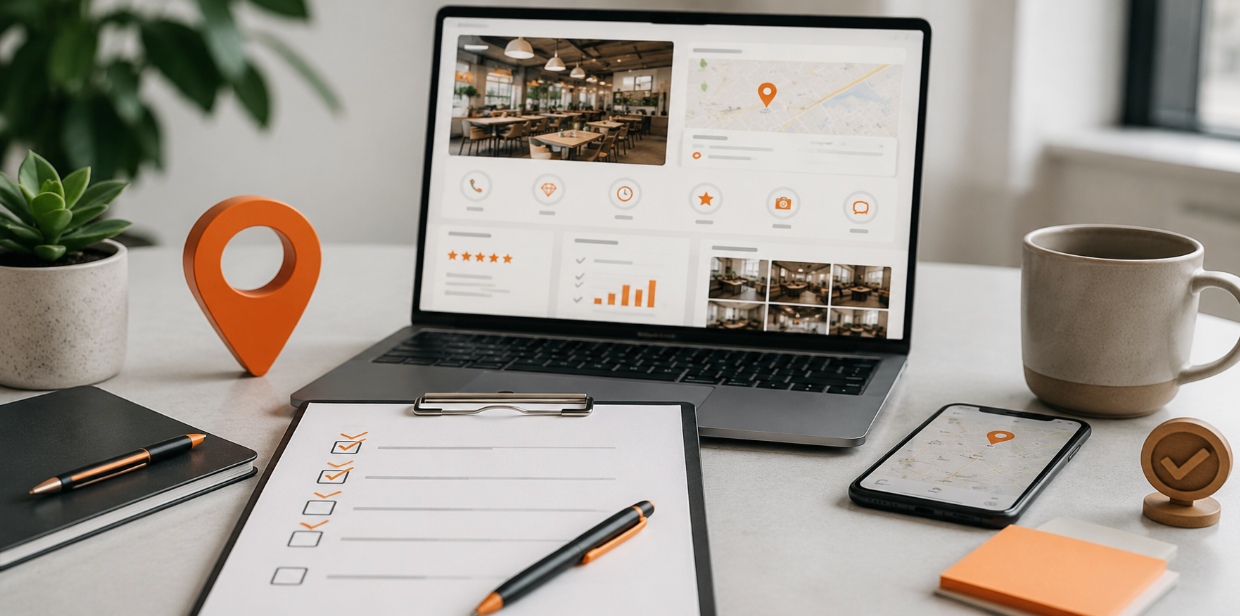
Use this list as a final review after the initial setup and again during quarterly audits.
Eligibility and Governance
- Business qualifies for a Google Business Profile.
- Storefront, service-area, or hybrid setup reflects reality.
- Business retains secure owner-level access.
- Profile is verified.
- No unnecessary duplicate profiles exist.
Core Information
- Real-world business name is used without keyword additions.
- Primary category accurately describes the core business.
- Additional categories are relevant and limited.
- Phone number is correct.
- Website link points to the most useful destination.
- Regular and special hours are accurate.
- Description is clear and factual.
- Relevant attributes are complete.
Services and Locations
- Services reflect the actual commercial offering.
- Service descriptions are written for customers, not keyword density.
- Service-area settings reflect where the business genuinely operates.
- Address is hidden when customers are not served there.
- Major services are supported by useful website pages.
- Legitimate locations have appropriate location pages.
Trust and Conversion
- Business uses original, representative photos.
- Review requests are part of a repeatable customer workflow.
- Review responses are monitored.
- No fake, purchased, gated, or misleading review practices are used.
- Business Posts are published when there is relevant information to share.
- Calls to action lead customers to working pages or booking paths.
Supporting Local SEO
- Core business information is consistent across important sources.
- Relevant citations are accurate.
- Structured data matches visible website information.
- Local and industry authority is being built naturally.
- Website pages support the same services and locations shown in GBP.
Measurement
- Baseline performance has been recorded.
- GBP Performance is reviewed regularly.
- Website traffic from GBP can be identified where possible.
- Local visibility is measured geographically when needed.
- Leads and conversions are tracked alongside rankings.
- Quarterly profile audits are scheduled.
Treat Google Business Profile as Part of the Local Search System

The most effective Google Business Profile optimization is usually less dramatic than many checklists make it sound.
Get the business model and eligibility right. Choose accurate categories. Keep business information current. Define genuine services and service areas. Build a legitimate review process. Connect the profile to strong website content. Measure what customers actually do.
Then maintain the system.
A Google Business Profile should not operate as an isolated listing. It is one part of a broader local-search presence that includes the website, technical foundation, reviews, citations, links, and the consistency of the business information customers encounter across the web.
For businesses that want those elements managed as one measurable program, SEO Team Toronto provides local SEO services built around practical implementation, ongoing QA, and business outcomes rather than isolated profile changes.
Want hands-on help? See our local SEO services.